What is the ENFJ personality type?
Coaches (ENFJs) understand and care about people. They have a unique ability to bring out the best in others. Coaches offer support and help everyone have a good time. They focus on understanding and encouraging others. Coaches also enjoy being the center of attention, which helps inspire and lead those around them. They look for the good in people and love to foster harmony and cooperation.
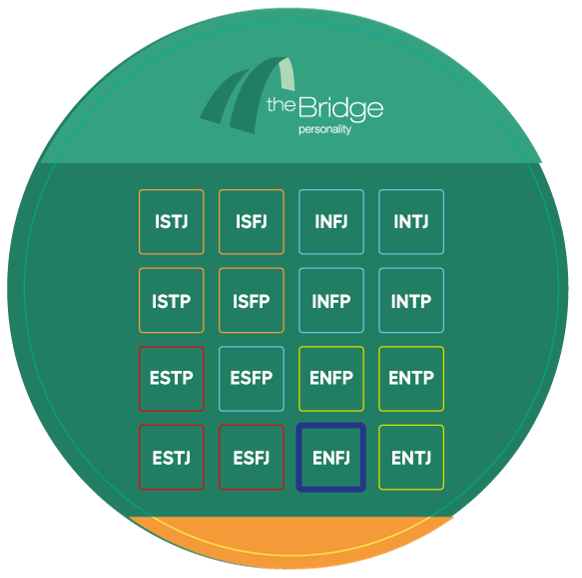
Preferences of ENFJs:
How do others see ENFJs?
ENFJs are interested in people, so they can also involve withdrawn people in matters. They listen to others, but they also have a pronounced own opinion. They draw energy from interacting with other people and are sociable. They love an organized life and try to quickly resolve uncertainties with others.
Others see ENFJs as:
Pitfalls and development points of the ENFJ
When ENFJs end up in a place where they cannot use their characteristics and talents, they can sometimes:
ENFJ and career
ENFJs are enthusiastic leaders who embrace change and inspire others. This can sometimes clash with personality types like ESTJs, who also like to take charge but prefer to stick to existing structures.
One challenge for ENFJs in the workplace is that they can become bored if their workdays are too repetitive. They need variety and creativity and want to do work that has a real impact. For them, it's not just about results but also about feeling that they are making a difference.
Best careers for an ENFJ
ENFJs seek meaning in their work and thrive in roles where they can help or motivate others. Thanks to their strong communication skills and charisma, they excel in positions where social interaction and leadership are key. Suitable careers include:





















The Bridge Tests & Online Assessments
TestGroup is the official provider of the renowned Bridge tests and online assessments, which are high-quality, scientifically validated psychometric tools used globally. Developed in collaboration with universities around the world, these assessments predict workplace behavior through personality tests, cognitive ability evaluations, and career assessments. We assist organizations globally in using online assessments.






-
What does the ENFJ personality type represent in The Bridge Personality?
-
The ENFJ is the inspiring guide within an organisation. People with this type connect easily, lift others up and naturally take on a coaching role. They combine warmth with structure and enjoy turning individual strengths into collective success.
-
How do ENFJs typically behave at work?
-
ENFJs are the people who notice when someone feels left out, who motivate a team during stressful moments and who keep everyone aligned with the bigger picture. They communicate clearly, make colleagues feel valued and bring energy into group discussions. Their positive influence often sets the tone for the whole team.
-
What are common challenges or development points for ENFJs?
-
Because ENFJs care deeply about people, they may take on too much responsibility or step in too quickly to solve someone else’s problem. They can struggle to say no, may overlook details when focused on group harmony and sometimes neglect their own needs when they want to support others.
-
Which careers are a natural fit for ENFJs?
-
ENFJs flourish in roles centred around people, communication and development. They are naturally suited for HR, coaching, education, leadership, communications, recruitment, social services and team-oriented commercial roles. Any position where they can help others grow tends to bring out their best qualities.
-
How is The Bridge Personality different from MBTI or 16Personalities, especially for ENFJs?
-
While MBTI-style tools only assign a type, The Bridge Personality goes deeper.
- ENFJs receive insight into both their type and the underlying personality traits behind it.
- The assessment uses advanced psychometrics designed for professional use in recruitment, leadership and team development.
- Organisations get a more precise and reliable picture of how ENFJs think, make decisions and collaborate. This makes the results far more actionable for employers.
-
Can ENFJ insights be used for hiring, coaching or team development?
-
Absolutely. Understanding the ENFJ profile helps organisations see how candidates motivate others, build trust and influence team culture. It supports better hiring decisions and provides clear guidance for leadership development and talent planning.
-
Is the ENFJ type permanent?
-
No. ENFJ describes typical preferences, not fixed behaviour. ENFJs adapt to their environment, grow through experience and show different strengths depending on the situation. The Bridge Personality highlights this flexibility by combining type information with detailed personality dimensions.
-
How can organisations apply ENFJ insights in daily practice?
-
- Give ENFJs responsibilities that involve coordination, coaching or team communication.
- Use them as connectors in change processes; they are strong at encouraging buy-in and supporting colleagues.
- Offer development focused on balancing empathy with boundaries and decision-making based on facts as well as feelings.
- Include ENFJ insights in leadership development programs where emotional intelligence is key.
-
Do clients receive a free debriefing of the results, and why is this valuable for ENFJ profiles?
-
Yes. The free debriefing session helps translate ENFJ results into practical actions. Because ENFJs often work in people-focused roles, the session helps organisations understand how to use their natural enthusiasm, leadership and empathy in a way that supports performance and well-being.
-
Is a free training session included with an annual subscription, and how does this support teams with ENFJs?
-
Yes. The free training helps teams understand how ENFJs influence group dynamics, how to make the most of their strengths and how to support them with clear structure and realistic boundaries. This ensures ENFJs stay effective without becoming overloaded.
-
Is there a team report available, and how is it useful when working with ENFJs?
-
Yes. The team report shows the ENFJ’s role within the team: the motivator, the connector and the person who brings energy into collaboration. It highlights how their presence affects communication, morale and team cohesion, and it helps organisations position ENFJs where they have the strongest positive impact.
Online Assessment Tips