Stick to what you know? Why assessments help you look beyond experience
Products
Sunday 28 December 2025


We all know the expression “stick to what you know,” often used to suggest that people should stay within familiar boundaries. Over time, the saying has come to mean that once you choose a path, you should remain on it and avoid stepping outside your comfort zone. This idea is frequently used to discourage people from exploring new roles, skills or career directions.
In practice, this way of thinking rarely reflects reality. People are adaptable and capable of learning, growing and reinventing themselves throughout their working lives. Tools such as a Big Five personality test show that personality traits influence how people learn, adapt and perform in different roles, rather than locking them into a single career path. Research and real-world experience confirm that skills are transferable and that career paths are flexible, making exploration and development a natural part of professional growth.
RIASEC career model
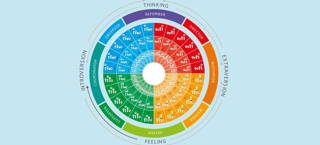
One model that is increasingly used is the RIASEC model, als known as the Holland codes or the Holland Occupational Themes. Within this model, a person's vocational interest is represented on 6 dimensions:
The same profile can be made for a position. If you then compare someone's personal profile with the profile of a particular job, you will immediately see whether there is a match. For example, a baker and a builder share many traits that allow them to be successful in their choice of profession.
This is good news for construction companies that are struggling with chronic staff shortages. They can tap into a new source of personnel! And for bakers for whom there is no longer any work (or who no longer feel like baking sweet rolls), this new way of looking at traits creates new opportunities.
Look more at interests and motives
Occupational choice tests based on interests and motives show that we have divided the job market into too many segments. In an interview, Bart Wille, university lecturer in industrial psychology and HRM at the University of Ghent, said that we should look beyond the classic job profiles: "On the labor market, we have started to think more and more in terms of boxes: We have erected fences between jobs where that is actually not necessary." He therefore calls for people's professional options not to be narrowed down but to be broadened based on character traits and interests.
How do you get a picture of someone's interests and motives?
Many HRM professionals would be only too happy to answer that call. But, to do that, you have to know what someone's interests and drives are. You can always ask them directly, but this will only provide a partial picture at best. The natural tendency to answer in a socially desirable way can also cloud this picture.
To have a prospective candidate extensively examined by a team of psychologists is going too far. However, TestGroup's online MBO career test, The Bridge Career, at a fraction of the cost and time, provides you with a report that clearly outlines your candidate's personality, interests, and career anchors.
Online MBO Career Test
The Bridge Career MBO career test is an online test developed by a team of professionals and scientists at Utrecht University. Accordingly, the MBO career test is not only scientifically validated (and therefore reliable), but also has great value in the workplace.
The test uses artificial intelligence (AI) and provides insight into the candidate’s career preferences and career anchors. By including a 4 color personality test, it also gives clear insight into behavior and communication style at work. The normative-ipsative split technology ensures that the system immediately detects socially desirable answers and asks additional questions, so the results remain reliable. Questioning the reported scores is therefore a thing of the past.
Although the online MBO career test has a total of 312 questions, which sounds like a big challenge, most people can complete the test within half an hour.
Taking the MBO career test without any hassle
Taking an online MBO career test is as easy as can be. When you decide to offer a candidate a career test (or if you want to take one yourself), simply request it via TestGroup’s website and within 30 minutes, the candidate can begin the test anywhere of anytime they feel comfortable.
Our AI system compares the answers of the candidate with the profiles of 232 MBO professions and tells you whether there is a match. In addition, the online MBO career test provides insight into personality, competencies, and interests.
The result is a truthful report that clearly displays a person’s career profile. When used as part of a sales assessment, this insight helps you make informed decisions and confidently plan the next steps for future development or career direction.
Video: Cognitive ability test for recruitment and selection
A cognitive ability test measures how well someone thinks and solves problems. The Bridge Ability Suite is widely used by companies, organizations and governments. It is often used during hiring or to see whether an employee is ready for the next step. You can order the test per candidate or use it through a subscription.




















-
What does “stick to what you know” mean in hiring?
-
“Stick to what you know” is a phrase often used to suggest that people should stay within familiar skills or roles. In hiring, this can lead to decisions based mainly on experience or past job titles instead of actual potential and fit for a role.
-
Why isn’t relying only on experience enough when hiring?
-
Experience and CVs alone don’t always show how someone performs in real work situations. They don’t reveal problem-solving skills, learning capacity, adaptability or cultural fit — all of which are important predictors of success in a role.
-
How do assessments help look beyond experience?
-
Assessments give objective insight into how candidates think, behave and perform. Unlike interviews and resumes, assessments evaluate underlying traits, competencies and potential, making it easier to identify people who will succeed even if their background looks different.
-
What kinds of assessments are useful in hiring?
-
Popular assessment tools include personality tests, cognitive ability tests and competency tests. These can measure reasoning, behaviour, soft skills and job-related competencies that aren’t visible on a CV.
-
How do assessments reduce hiring risk?
-
Assessments reduce reliance on subjective impressions and help avoid bad hires by providing quantifiable data about candidate strengths and development areas. This leads to more accurate decisions and better long-term fit.
-
Can assessments predict how well someone will perform on the job?
-
Yes. When properly designed and validated, assessments can help predict future performance by measuring relevant skills and traits linked to success in specific roles. This makes them a powerful complement to traditional hiring tools.
-
Do assessments replace interviews?
-
No. Assessments are best used alongside interviews. Together they give a fuller picture — assessments provide data-driven insights, and interviews allow you to explore motivations, communication style and cultural fit.
Online Assessment Tips