Candidate Assessment in Job Interviews: How Algorithms Add Objectivity
Products
Tuesday 13 January 2026


Humans are social beings. That has always been one of our greatest strengths. We work together, share knowledge, and achieve results that individuals could never accomplish alone. Organizations are a clear example of this. Even the most successful company cannot function without people who collaborate effectively.
At the same time, there is a less visible side to this social nature: conformism. We all want to be accepted by the group. As a result, we tend to adapt our behavior and answers to what we believe is expected of us. In recruitment and selection, this happens every day. Ask candidates a question and, almost without exception, they give the “right” answer. Their self-description aligns perfectly with the vacancy text. On paper, everyone seems like the ideal match.
This is understandable. Candidates naturally want to present themselves in the best possible light. They emphasize strengths, downplay weaknesses, and frame their experience in a way that fits the role. The critical question, however, is not whether this happens, but how far it goes.
Is the candidate being fully honest, or are the answers shaped by social desirability? Are you assessing real behavior, underlying motives, and actual competencies, or mainly the ability to give convincing answers?
This is where a well-designed assessment makes the difference. A sales assessment, for example, goes beyond what a candidate says about being persuasive or results-driven. It measures concrete sales competencies, decision-making under pressure, and commercial behavior that predicts performance in real sales situations.
The same applies to an assessment for legal roles. In the legal domain, accuracy, judgment, integrity, and the ability to reason under complex conditions are critical. These qualities are difficult to evaluate through interviews alone, especially when candidates know exactly which answers are expected. A targeted legal assessment helps distinguish between surface-level responses and genuine professional capabilities.
In a labor market where candidates are increasingly skilled at presenting themselves, relying solely on interviews and CVs is no longer sufficient. Objective, role-specific assessments provide insight into what truly matters: how someone thinks, decides, and behaves when it counts.
Your own blind spot
You may not like to hear it, but everyone has a blind spot. Including you. Conformism is not only something you see in candidates. It also occurs within your own team. People adapt, avoid friction, and align with what they believe the group expects.
Do you notice that you and your colleagues almost always agree with each other? That might feel like a sign of a strong team. But if there is never a firm disagreement, peer pressure is likely influencing decisions, including in your selection process.
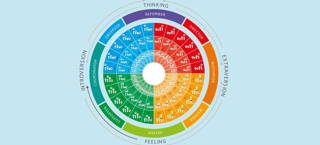
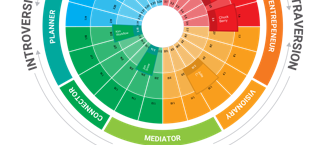
This is exactly where a 4 color personality test adds value. By making differences in communication styles, motivations, and decision-making preferences visible, it helps teams recognize blind spots and unspoken assumptions. Instead of everyone thinking alike or following the loudest voice, you get a clearer picture of how people really differ and how those differences affect hiring decisions.
Is conformism something you should want in your recruitment and selection process? No. Diversity of perspectives leads to better judgments, more balanced decisions, and stronger teams. A structured personality assessment helps you move away from groupthink and towards decisions based on insight rather than pressure.
Online application test puts an end to socially desirable answers
Because of socially desirable answers, you don't always end up with the best person for the job. With an online application test, you can ask the candidate additional questions where it is exactly clear how honest the candidate has been. The Bridge Personality test is a modern (adaptive) test that uses Artificial Intelligence (AI).
Part of this test is the Normative-Ipsative split technology. This clever piece of AI makes it clear exactly where and when steered answers were given. Per question you can immediately see if a candidate hesitated about a question.
Where and when it is convenient for the candidate
Another advantage of The Bridge Personality test is that the candidate can take this test when and where it is convenient for him or her. So, there is a good chance that the candidate is less nervous. It makes quite a difference whether you answer a question at a table, in front of three people who are staring at you expectantly, or comfortably from the couch. Those who feel more secure will be less inclined to give socially desirable answers.
Objective input
The Bridge Personality test reports regularly provide new insights. Seemingly suitable candidates fall through the cracks, while candidates who are a little less good suddenly turn out to be a brilliant diamond. Try it out.
Video: Professional burnout test
A professional burnout test gives you quick insight into burnout symptoms and work happiness. The Bridge Burnout Indicator is scientifically developed to help prevent burnout in employees.
This burnout test is designed for professional use and applies smart algorithms to provide a reliable and valid indication of burnout risk.




















-
What is a candidate assessment in job interviews?
-
A candidate assessment is a structured evaluation that goes beyond traditional interviews to measure competencies, personality, and skills. Tools like The Bridge Personality, The Bridge Ability Suite, and The Bridge Career help employers understand what candidates really think and how they will perform.
-
Why should recruiters in the Netherlands use online assessments?
-
Recruiters in the Netherlands and Europe face a competitive labor market. Online assessments add objectivity, reduce bias, and provide data-driven insight that complements interviews and CVs.
-
How do algorithms add objectivity to job interviews?
-
Algorithms help interpret candidate responses consistently, identify patterns in competencies and behavior, and reduce subjective judgment. This leads to fairer and more reliable hiring decisions.
-
What is The Bridge Personality assessment?
-
The Bridge Personality is a scientifically validated personality test that reveals how candidates communicate, collaborate, and lead. It helps Dutch and international recruiters predict job fit and team dynamics.
-
How does The Bridge Ability Suite support hiring?
-
The Bridge Ability Suite measures cognitive ability and problem-solving skills. It gives recruiters in the Netherlands and abroad insight into how candidates think and make decisions under pressure.
-
Can assessments improve interview accuracy?
-
Yes. Combining assessments with interviews reduces reliance on first impressions and social desirability bias. This gives a clearer picture of a candidate’s true potential.
-
What is The Bridge Career report?
-
The Bridge Career report identifies a candidate’s professional motivations and long-term career direction. It supports career conversations and improves retention planning.
-
Are candidate assessments compliant with privacy laws in Europe?
-
Yes. TestGroup assessments are designed to comply with GDPR and other relevant data protection standards, ensuring privacy and fairness for candidates.
-
How do assessments benefit hiring managers?
-
Hiring managers get objective data, benchmark comparisons, and clear insights into strengths and development areas. This leads to better hiring decisions and reduced turnover.
-
Do assessments replace interviews?
-
No. Assessments complement interviews by providing evidence-based data. Together they create a holistic view of a candidate’s capabilities and fit for the role and organization.
-
Can assessments be used for different roles, like sales or legal positions?
-
Yes. Specific assessments such as sales assessments and role-tailored evaluations (including assessments for legal roles) help measure job-related competencies and increase prediction of performance.
-
How quickly can results be used in the hiring process?
-
Assessment results from The Bridge tools are available immediately after completion, enabling fast, data-driven decisions in recruitment workflows across the Netherlands, Europe, and globally.
Online Assessment Tips