The learning professional remains employable with a competency test
Products
Tuesday 30 December 2025


It is often said that knowledge becomes outdated soon after graduation. That idea has been around for a long time, but the gap between what people learn and what organizations need is now clearly visible.
Many professionals are trained for situations that no longer exist. Developing education and training programs takes time. By the time learning goals are defined and courses are in place, several years may have passed. During that period, roles, tools, and required skills continue to change. Only recently are new professionals entering the labor market with digital skills that better match what organizations actually need.
The skill gap threatens employability
Digitalization is not the only reason for the growing skills gap. The way organizations look at work and development has also changed. Learning does not stop once someone is hired. People grow by doing, by making mistakes, and by reflecting on their behavior at work.
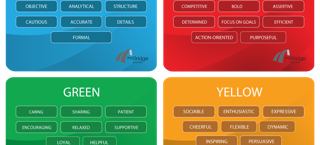
In many organizations, performance conversations still focus mainly on past results. This can make employees feel judged instead of supported, which slows down learning. When the focus shifts to what someone has learned, what they want to develop, and how a manager can support that growth, learning becomes part of daily work. Personality tools such as a 4 color personality test or a big five personality test can help make these conversations more concrete by giving insight into behavior, communication style, and development needs.
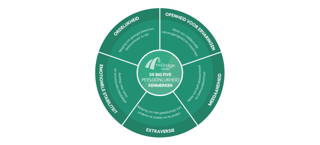
Where professional knowledge used to be enough, flexibility has become a key competency. Employees need to adapt to change, deal with new situations, and respond proactively to what is happening around them. The big five personality test helps organizations understand traits such as openness to change and emotional stability, while a 4 color personality test gives practical insight into how someone prefers to work and interact with others.
The list of important competencies is broader than ever. Collaboration, involvement in the organization, and a healthy balance between work and private life all play a role. Tools like personality tests support this by creating a shared language for behavior and development.
Work places high demands on professionals. Organizations that invest in learning and development, supported by insights from personality assessments, benefit from higher engagement, lower turnover, and teams that are better prepared for change. By investing in people, you strengthen both employability and long-term competitiveness.
Increasing employability
The more competencies and skills someone possesses, the broader the employability of the professional. This starts with the immediate supervisor. They must hold a different kind of performance interview. Instead of looking back at how the job was done, you can instead look back at what the employee has learned and what they can still learn in the coming period.
A good starting point for a performance appraisal that is focused on learning is the competency test.
Competency test
A competency test is widely used during the recruitment and selection phase, where it acts as a selection tool to determine whether a candidate possesses the necessary skills to properly fill the vacant position. The cognitive capability test serves mainly to avoid bad hires.
Especially in the early days, competency tests were very expensive and labor intensive. The candidate had to go to a test center, where they were then screened by all sorts of specialists. Because a bad hire can easily cost € 50,000 (or more), this was primarily an investment when recruiting for key positions
For existing staff, there may have been a need for competency tests, but the price proved to be a limiting factor.
Virtual cognitive capability tests now readily available
The more competencies and skills someone develops, the broader their employability becomes. This process starts with the direct manager. Performance conversations work best when they focus less on past results and more on what an employee has learned and what they want to develop in the next period.
A learning-focused conversation benefits from objective input. A competency test provides insight into strengths and development areas, while a cognitive ability test shows how someone learns, solves problems, and handles new information. Together, these assessments create a clear and practical basis for meaningful development discussions.
Win-win
For candidates, an online cognitive ability test is simple and efficient. There is no need to travel or block a full day. They log in at a time and place that suits them, complete the test in about an hour, and the report is available straight away. This saves time for both the candidate and hr.
For organizations, online competency tests are also cost-effective. Compared to traditional assessments, the costs are much lower, which makes it easier to use them more often. Not only for new hires, but also to regularly understand the learning needs of existing employees. You can easily order online assessments whenever they are needed.
The clear report shows what an employee needs to develop to perform better in their role or prepare for a next step or promotion. Using online competency tests helps modernize performance conversations and shifts the focus to learning and growth. When employees stay employable, both the organization and the professional benefit.
Video: Online sales assessment
An online sales assessment measures how well someone performs in sales roles. It gives insight into skills such as prospecting, customer relationships, and problem solving. This helps you see whether a candidate can handle sales conversations and deliver results.
The sales assessment provides clear and immediate insight into sales skills and potential. You can use it for individual candidates or choose a cost effective subscription for ongoing recruitment and development needs.






















-
Why are competency tests important for learning professionals?
-
How does a competency test support employability?
-
By showing strengths and development areas, a competency test makes performance conversations more forward-looking. It shifts the focus from past performance to future learning and growth.
-
When should organizations use competency tests?
-
Organizations can use them during recruitment and selection to find candidates with the right skills. They also use them for existing staff to guide development, coaching and promotion decisions.
-
How do online competency tests save time and cost?
-
Online tests can be taken anywhere without travel or long schedules. Results are available immediately, which saves time for both candidates and HR teams and reduces costs compared with traditional testing methods.
-
What insights do competency test reports provide?
-
Reports highlight where someone excels, where improvement is needed, and what learning or development steps make sense next. This supports meaningful development conversations.
-
Can competency tests be used beyond recruitment?
-
Yes. Competency tests are also valuable for performance reviews, learning and development planning, and internal career progression.
-
How long does an online competency test take?
-
Most online competency tests take around an hour to complete, and results are available right after finishing the test.
-
How do competency tests fit into HR practices?
-
They provide data-driven insight that helps HR make better hiring and development decisions, match skills with job requirements and build stronger teams.
-
What is the difference between a competency test and other assessments?
-
Competency tests focus on specific skills and behaviours needed to perform a job. Other assessments, like personality or cognitive tests, measure traits or learning ability that also affect job performance.
-
What is a competency test?
-
A competency test measures a person’s skills, knowledge and abilities against the requirements of a specific role or job. It gives objective insight into where someone is strong and where development is needed.
Online Assessment Tips