What is the ENFP personality type?
Inspirers (ENFPs) see life as a creative adventure filled with exciting possibilities. They understand people well, are empathetic, and have good insights about the present and future. They need affirmation from others and also show appreciation in return. They want to live according to their inner values and standards. Inspirers know how people and groups work. They are persuasive in chasing what is important to them. Their enthusiasm can inspire others to be their best selves.
The 16 Personality Test identifies ENFPs by their creativity and enthusiasm. Companies utilize this assessment to direct ENFPs toward roles that require innovation, adaptability, and social engagement.
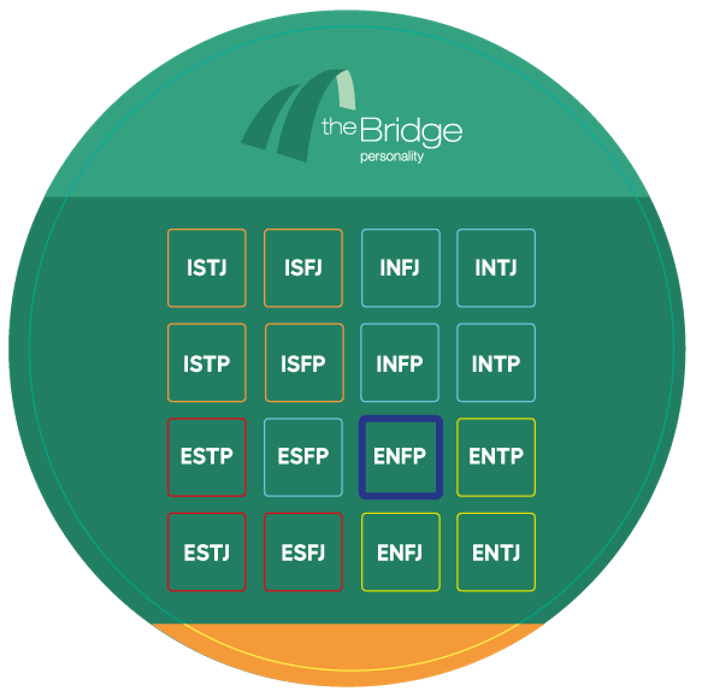
Preferences of the ENFP:
How do others view ENFPs?
Inspirers are often lively and enjoy being around others. They invest significant attention in open and honest communication; valuing relationships highly. They like to be seen in groups because their enthusiasm and energy are contagious, motivating those around them.
Others view ENFPs as:
Pitfalls & development points of the ENFP:
When Inspirers find themselves in places where they cannot use their characteristics and talents, they can:
ENFP and Career
ENFPs excel in diverse, free, and creative settings. They prosper in spaces where they can share innovative ideas and have room to expand. While a bit of structure aids their concentration, a strict hierarchy or inflexible work culture is not suitable for them.
Working with an ENFP
Have an ENFP colleague? Chances are they’re your most energetic and enthusiastic teammate! They bring fresh perspectives and ensure that everyone, even the more introverted colleagues, has a voice. Since they can sometimes get distracted by new ideas, a little guidance helps direct their energy in the right way.
Best Careers for an ENFP
Because ENFPs have many interests and a wide range of talents, choosing a career that keeps them engaged long-term can be challenging. They thrive in roles where they can use their social skills, creativity, and curiosity. Suitable careers for ENFPs include:




















The Bridge Tests & Online Assessments
TestGroup is the official provider of the renowned Bridge tests and online assessments, which are high-quality, scientifically validated psychometric tools used globally. Developed in collaboration with universities around the world, these assessments predict workplace behavior through personality tests, cognitive ability evaluations, and career assessments. We assist organizations globally in using online assessments.






-
What does ENFP mean?
-
ENFP is one of the 16 personality types based on Jung’s typology. It stands for Extraversion, Intuition, Feeling and Perceiving. People with an ENFP personality type are often described as enthusiastic, imaginative and people-oriented.
-
Is the ENFP type the same as the ENFP type in the MBTI?
-
No. The MBTI also uses the ENFP label, but The Bridge Personality is a different, scientifically validated assessment with its own method, scoring system and research base. The type names may look familiar, but it is not the MBTI.
-
How is an ENFP described in a professional assessment?
-
An ENFP personality type is energetic, creative and highly focused on possibilities. They enjoy working with people, bring enthusiasm to teams and excel in roles that allow freedom, inspiration and variety.
-
Which professional roles suit an ENFP best?
-
ENFPs perform well in environments where they can interact with others and explore new ideas. Typical roles include trainer or coach, HR specialist, marketing or communications roles, project roles involving creativity, and positions where relationship-building is important.
-
What challenges may ENFPs face at work?
-
ENFPs can lose motivation when tasks become repetitive or overly detailed. They may start many ideas but finish fewer, and they can become restless in highly structured environments with strict rules or limited flexibility.
-
How can organisations use ENFP assessment results?
-
Understanding that someone has an ENFP profile helps organisations make better decisions in recruitment, coaching and team composition. The profile highlights strengths such as creativity, energy and communication, while also showing where structure or support may be helpful.
-
Is an ENFP personality type better or worse than other types?
-
No. Each of the 16 personality types has its own strengths and development areas. The ENFP personality type simply reflects natural preferences. The value lies in matching people with roles and environments where they can thriv
-
How scientific is the ENFP classification in this assessment?
-
The 16-type framework comes from Jung’s theory, but The Bridge Personality is grounded in modern psychometrics and validated with large norm groups. It is a professional workplace assessment and not the MBTI, even though the type labels are comparable.
-
Can someone change from ENFP to another type?
-
Core personality preferences tend to remain stable, but behaviour can develop. People can learn new skills and adjust their working style, even if their underlying ENFP tendencies stay consistent.
-
Why is identifying an ENFP personality type useful for organisations?
-
The ENFP profile provides insight into how someone thinks, collaborates and approaches challenges. It helps organisations design better teams, make informed hiring decisions and support employees in roles that match their strengths.
Online Assessment Tips