What is the INFJ personality type?
INFJ personality types are empathetic and often inspire others. They focus on helping people grow and develop. They use their intuition to understand complex issues and build strong relationships. They trust their insights and feelings to grasp others' emotions and motivations, often realizing how others feel before understanding their own feelings. Advisors blend this understanding with motivation and organizational skills to carry out plans that can improve people's lives. They look for meaning and the big picture in their lives and pay less attention to details. Advisors concentrate on developing complex ideas and insights.
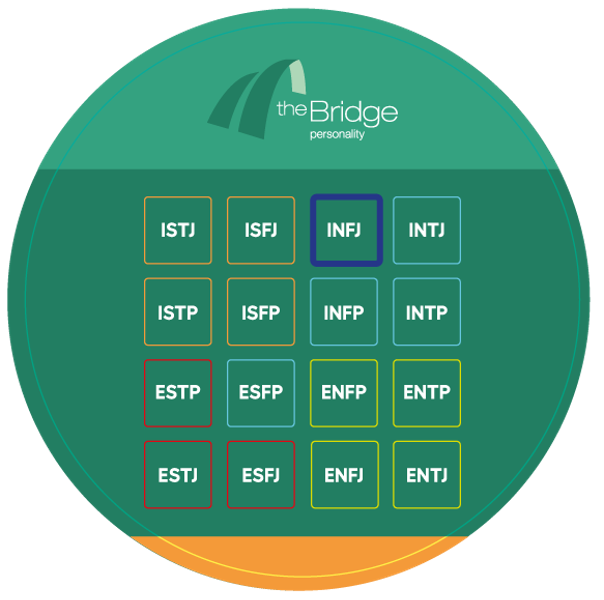
Preferences of the INFJ:
How others view INFJs:
Advisors are often kind and understanding, showing empathy when needed. They can seem mysterious because they keep their intuitive thoughts to themselves. When they share their beliefs, they may use complex words and comparisons. They value genuine relationships and connections with others. Even though advisors can be reserved, they will stand up for their values when necessary.
Others see INFJs as:
Pitfalls & development areas for INFJs:
If INFJs end up in situations where they cannot use their traits and talents, they may:
INFJ and career
INFJs adapt easily, but that doesn’t mean every work environment suits them. They feel uncomfortable in settings where they have little autonomy or influence. A competitive workplace is also not ideal for them; INFJs prefer to collaborate and learn from others without hierarchical barriers.
What makes INFJs great colleagues is their empathy and sense of responsibility. They genuinely enjoy helping others and ensuring tasks are completed successfully. However, they also need time to recharge. Sometimes, they need to step back and work independently to restore their social energy.
Best careers for an INFJ
INFJs are more likely to choose a meaningful career over one with a high salary or status. They draw the most energy from work where they can help others or express their creativity. Some even combine a creative side hustle with a steady job. Suitable careers for INFJs include:





















The Bridge Tests & Online Assessments
TestGroup is the official provider of the renowned Bridge tests and online assessments, which are high-quality, scientifically validated psychometric tools used globally. Developed in collaboration with universities around the world, these assessments predict workplace behavior through personality tests, cognitive ability evaluations, and career assessments. We assist organizations globally in using online assessments.






-
What makes the INFJ personality type unique in The Bridge Personality, and how does it compare to the MBTI?
-
The INFJ personality type in The Bridge Personality describes a thoughtful, strategic and empathetic way of working. While the description is similar to the MBTI, The Bridge Personality is a different and more modern assessment. It uses combined normative-ipsative measurement, which makes the results more reliable and less sensitive to social desirability.
-
How does the INFJ personality type typically behave in professional settings?
-
INFJ personality types work calmly, carefully and with focus on long-term goals. They often bring depth, structure and clear reasoning to their tasks, which makes them valuable in roles that require accuracy and reflection.
-
Which communication style is common for the INFJ personality type?
-
They communicate in a thoughtful and measured way. INFJ personality types listen well, consider different viewpoints and prefer meaningful conversations over quick decisions. This contributes positively to teamwork.
-
What motivates the INFJ personality type at work?
-
They are motivated by structured processes, clear expectations and work that has long-term value. Assignments that require planning, analysis or reflection suit them well.
-
How does the INFJ personality type handle complex information and strategic thinking?
-
INFJ personality types enjoy analyzing information in depth and identifying underlying patterns. They work in a structured way and can translate complex issues into long-term plans or clear solutions.
-
Which work environments are a good match for the INFJ personality type?
-
They work best in calm, organized environments where quality is prioritized. Roles in HR, coaching, analysis, research, consultancy or policy often fit their natural strengths.
-
How can managers best support someone with an INFJ personality type?
-
They appreciate clear agreements, predictable routines and space to work independently. Regular check-ins focused on content and planning help them stay on track and feel supported.
-
What challenges may the INFJ personality type experience in fast-changing situations?
-
Unexpected changes, unclear priorities or constant interruptions can be stressful. Providing structure, clarity and realistic deadlines helps them stay effective.
-
How does the INFJ personality type deal with conflict, feedback and interpersonal dynamics?
-
They prefer calm, respectful communication and clear explanations. Direct but constructive feedback works best, especially when linked to concrete steps for improvement.
-
In what ways does the INFJ personality type in The Bridge Personality differ from other types in systems such as the MBTI?
-
The descriptions may feel familiar, but The Bridge Personality is not the MBTI. It uses a scientifically validated method that combines two types of measurement. This makes the results more precise, more stable and better suited for use in organizations.
Online Assessment Tips