The job market is under sustained pressure. As a recruitment professional, you experience this every day. Finding the right candidate for an open role has become increasingly difficult, even when the vacancy is well defined and attractive.
Across both the UK and the US, demand for talent continues to outpace supply. Many organisations see fewer applications per vacancy, and the pool of suitably qualified candidates is shrinking. Skills shortages, demographic changes and increased job mobility mean that candidates have more choice, while employers compete for the same profiles.
Labour market data consistently shows that the number of open positions remains high relative to the number of active job seekers. This imbalance puts pressure on recruitment teams to work faster, make better hiring decisions and look beyond traditional CV screening.
In this context, organisations are increasingly relying on assessments and online assessments to identify potential, rather than focusing solely on experience. By assessing skills, cognitive ability and personality, recruiters in the UK and US can broaden their talent pool and make more objective, data-driven hiring decisions in a tight labour market.
Hiring in a tight labor market in the UK and US
The labour market in the UK and the US remains under significant pressure. HR professionals experience this daily when trying to fill open positions. What started in sectors such as engineering, healthcare and logistics is now visible across almost all industries. Organisations are using a wide range of incentives to attract candidates and bring people in as quickly as possible.
Sign-on bonuses and financial incentives in recruitment
Sign-on bonuses and financial incentives have become common tools in recruitment. Companies offer cash rewards for joining, bonuses for staying a few months, or other short-term perks to stand out in a competitive market. These incentives may increase the number of applicants, but they also raise an important question: are you attracting the right people, or simply those who are most responsive to short-term rewards?
Intrinsic versus extrinsic motivation
Every HR professional is familiar with the difference between intrinsic and extrinsic motivation. Intrinsically motivated employees are driven by the content of the role, leadership responsibilities and opportunities for development. This is especially relevant when hiring through an assessment for managers, where long-term leadership potential and decision-making skills matter more than a one-time incentive.
Extrinsic motivators, such as bonuses, mainly appeal to candidates who focus on immediate financial gain. This often leads to short-term commitment rather than long-term engagement.
The role of assessments for specialised positions
The same risk applies when hiring specialised profiles. An assessment for finance focuses on analytical ability, accuracy and responsibility, while a sales assessment looks at persuasion, resilience and customer focus. When candidates are attracted primarily by financial rewards, there is a higher chance they will leave as soon as another employer offers a similar incentive.
Why short-term incentives increase employee turnover
Relying on short-term rewards often leads to higher employee turnover. Candidates who join because of a bonus may leave just as easily. In a market where workloads are increasing and compensation does not always keep pace with inflation, these incentives quickly lose their impact once employees experience the day-to-day reality of the job. A cognitive ability test helps organisations look beyond short-term attraction by providing insight into a candidate’s learning ability, problem-solving skills and long-term potential, supporting more sustainable hiring decisions.
Look beyond short-term hiring solutions
Hiring the wrong person is costly. High turnover affects productivity, team stability and long-term performance. Even in a tight labour market, selecting the right candidate remains essential. Focusing only on speed can undermine long-term success.
Online assessments as a sustainable hiring strategy
A more sustainable approach is to look beyond short-term incentives and focus on long-term fit. Online assessments make this possible without slowing down the hiring process. A well-designed assessment or online assessment provides objective and scientifically validated insights into skills, motivation and potential within a short timeframe.
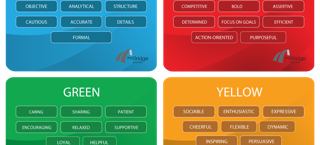
For HR teams and recruiters in the UK and the US, using tools such as an assessment for managers, an assessment for finance, a sales assessment or the 4 color personality wheel helps shift the focus from quick attraction to sustainable hiring decisions. This increases the likelihood of selecting candidates who not only join, but also perform well and stay with the organisation longer.
Online ability test at a college level
The Amsterdam-based company TestGroup offers an online ability test at a college level. This allows you to see if a candidate has the necessary abilities for vacancies at a college level. The test works with artificial intelligence and is used for recruiting staff, but also to see if someone can handle a certain course or whether they are suitable for a development trajectory.
Easy ability testing for P&O and the candidate
The online ability tests are reasonably priced. Moreover, applying for the test takes less than 30 minutes. The candidate receives an invitation link by email, and then they can then take the test whenever and wherever it is most convenient for them. Afterwards, you will quickly receive an extensive report about the candidate. This report is as insightful as possible, so you can easily see if the candidate meets your expectations. And, should you have any questions interpreting the results, TestGroup’s consultants are ready to help.
Special online tests for ICT companies
TestGroup has developed a special ability test for ICT companies, which combines The Bridge Career career test and The Bridge Ability Suite ability test. This test is specifically designed for retraining programs for ICT positions. ICT companies trying to solve their staff shortage by retraining people from outside the ICT sector can benefit from this online assessment for retraining in ICT.
Testing candidates is easier than ever with online assessments
Thanks to the ability to order online assessments, it is easier than ever to test applicants and candidates for job suitability. Organisations can quickly select, deploy and complete assessments online, giving immediate insight into skills, potential and fit for the role, without slowing down the recruitment process.