The Bridge Personality: the book for sales
View and download this digital book
The Bridge Personality
The Book for Sales
ENGLISH EDITION
TESTGROUP
personality
The Bridge Personality is the modern personality questionnaire that
reports Big Five personality facets and Jung Types.
The Bridge Personality is one of the most widely used tools for selection
and development.
The Bridge Personality has been independently rated as one of the best
questionnaires to measure Jung Types
You can now extend your knowledge of The Bridge Personality with the
Bridge Personality Sales Report and ‘The Bridge Personality: the book
for sales’. This book will help you understand the Sales Report.
This book describes the six steps of sales, the four sales types and the 16
potential Jung Types of clients.
With this book you can optimize your sales skills.
Want to know more? Try:
The Bridge Personality: the book for candidates
The Bridge 360: the book for candidates
978 94 90571 01 6
Productcode: BPTC012
UK Version
This product is sold in packs
of 10
personality
The Bridge Personality is the modern personality questionnaire that
reports Big Five personality facets and Jung Types.
The Bridge Personality is one of the most widely used tools for selection
and development.
The Bridge Personality has been independently rated as one of the best
questionnaires to measure Jung Types
You can now extend your knowledge of The Bridge Personality with the
Bridge Personality Sales Report and ‘The Bridge Personality: the book
for sales’. This book will help you understand the Sales Report.
This book describes the six steps of sales, the four sales types and the 16
potential Jung Types of clients.
With this book you can optimize your sales skills.
Want to know more? Try:
The Bridge Personality: the book for candidates
The Bridge 360: the book for candidates
978 94 90571 01 6
Productcode: BPTC012
UK Version
This product is sold in packs
of 10
Copyright © 2008, 2007, 2026 Testgroup BV. All rights reserved.
Published and distributed with the permission of the publisher Testgroep BV, Herengracht 282, 1016BX, Amsterdam.
Second edition published in English in The Netherlands. Nothing from this edition may be multiplied, saved in an automatic database or
made public in any form of media or in any way, electronic, mechanical, by photocopies, tapes or any other way, without preliminary written
permission from the publisher.
The Bridge personality is a registered trademark of Testgroep BV
The Bridge is a registered trademark of Testgroep BV
TestGroup Consulting is a registered trademark of Testgroep BV
TestGroup
Herengracht 282
1016BX Amsterdam
The Netherlands
info@testgroup.com
Tel: +31202621630
www.testgroup.com
ISBN: 978 94 90571 01 6
The Bridge Personality
The Book for Sales
A guide for the interpretation of the results of your Bridge Personality Sales Report®
Second edition
English version
TestGroup
The Six Steps of Sales
Introduction: Six Steps of Sales 6
Step 1: Planning & Preparation 7
Exercise: Planning & Preparation 8
Step 2: Making Contact 9
Exercise: Making Contact 10
Step 3: Building Desire 11
Exercise: Building Desire 12
Step 4: Presenting The Options 13
Exercise: Presenting The Options 14
Step 5: Closing The Deal 15
Exercise: Closing The Deal 16
Step 6: CRM 17
Exercise: CRM 18
The Four Sales Types
Introduction to The Sales Types 19
Hunter 20
Consultant 21
Farmer 22
Negotiator 23
The 16 Jung Types
Using Jung Types in Sales 24
The Jung Typetable 25
ISTJ Realist 26
ISFJ Carer 27
INFJ Advisor 28
INTJ Scholar 29
ISTP Solver 30
ISFP Peace maker 31
INFP Idealist 32
INTP Strategist 33
ESTP Doer 34
ESFP Performer 35
ENFP Inspirer 36
ENTP Innovator 37
ESTJ Decision-Maker 38
ESFJ Service Provider 39
ENFJ Coach 40
ENTJ Leader 41
Using the 4-Colour Model in Sales
Using the 4-Colour Model in Sales 44
Selling to Blue Customers 48
Selling to Red Customers 49
Selling to Yellow Customers 50
Selling to Green Customers 51
Content
Introduction: Six Steps of Sales
any organisations use The Bridge Personal-
ity and the Bridge Personality Sales Report
for the selection and development of sales em-
ployees. With the Sales Report you can determine
the sales type of a sales employee and you can see
in which of the 6 steps of sales an employee may
perform optimally. The Bridge Personality Sales
Report separates the total sales process in 6 steps
of sales: Planning & Preparation, Making contact,
Building desire, Presenting the options, Closing
the deal and Managing client relationships.
The success that a sales employee may have in a
certain Step of Sales, is dependent on the person-
ality of the sales employee. For each step of the
sales process, different personality dimensions are
of importance. To select and develop sales em-
ployees, organizations may want to focus on these
dimensions. By using The Bridge Personality and
The Bridge Personality Sales Report it is possible
to assess these personality dimensions in a scien-
tific way.
On the next pages the six steps of sales are ex-
plained further. The descriptions of each sales
phase will clearly explain sales tasks that are
important and which of the 34 Bridge dimensions
(from The Bridge Personality extended report)
are relevant. Per sales phase an overview is given
regarding the personality traits and the skills that
are needed. Please note that each sales phase is
accompanied by a practical training exercise. The
exercises will help sales employees to develop
their skills on each of the six steps of sales.
l P
resenting the options B
ild
in
ir
e C
M Planning & Preparatio
Step 1: Planning & Preparation
alented sales employees make sure that they
plan their sales tasks well ahead and they
make sure that they start the sales process well
prepared. During this preparation it is essential to
have a good overview of the market. To get this
overview, the sales employee asks questions like:
‘Who are the target prospects?’ and ‘When and
how can I reach out to these prospects?’. When
this information is known, the sales employee
can start contacting these prospects. A good sales
employee knows what the position of the product
is when compared to the competition. To achieve
this, the sales employee actively tries to answer
the following questions: ‘How well known is our
product?’, ‘What is the price of our product and
the price of the competitor’s product?’, ‘What is
the status of our product?’ and ‘What is the opti-
mal way of introducing our product to the mar-
ket?’
The next step is creating a plan to achieve the
envisioned sales goals. Therefore calculations are
made by the sales employee on the numbers that
need to be sold to achieve the targets, what per-
centage of the contacted prospects will actually
need to buy the product to achieve the target and
thus, how many clients will need to be contact-
ed to achieve the targets. Part of this process is
the preparation of contacting prospects. A sales
employee will carefully select the prospects and
clarifies what will be communicated to the pros-
pects regarding the product. Also, potential pros-
pect questions are prepared and answered. It is
important that at this stage of the sales process the
sales employee is focused on getting the deal and
acts accordingly.
Matching Bridge Personality Dimensions:
• Methodical
• Enterprising
• Analytical
Sales employees with low scores 1-3
• Are less organised and may have trouble with
prioritising their sales tasks.
• Are less able to prepare for their sales presen-
tation due to a lack of product knowledge.
• Have trouble reaching out to the right pros-
pects.
• Do not prepare a timetable and do not create a
clear and concrete sales plan.
Sales employees with high scores: 8-10
• Know who the right prospects are and know
where these prospects are.
• Have all the knowledge about the status and
market position of their product.
• Create a clear sales plan and have clear sales
targets in their plan.
l P
resenting the options B
ild
in
ir
e C
M Planning & Preparatio
Exercise: Planning & Preparation
Skills to be trained
With planning and preparation the following skills
are important:
• Analysing the market
• The sales employee tries to envision po-
tential prospects: ‘Who wants the prod-
uct?’, ‘How can they be reached?’, ‘Who
do I need to approach?’.
• The sales employee needs excellent
knowledge of the product that is sold but
also needs this knowledge from compet-
ing products.
• Preparing a sales plan
• A good sales employee prepares a detailed
sales plan with the targets included.
• Per day or per hour, the tasks are defined.
Large goals are separated in smaller goals.
• Preparing the meeting
• The sales employee knows who to ap-
proach, knows what to say, knows what
questions to ask and knows the answers to
potential prospect questions.
• The sales employee makes sure that all
information that is needed is easily acces-
sible during the meeting. The sales em-
ployee focusses on the sale and the goals
for the meeting with the prospect.
Exercise: Planning and Preparation
By doing this exercise the sales employees can
learn how to create a prospect group for their
products. They also learn how to analyze the mar-
ket position of their products. When this is done,
they can prepare a complete and detailed sales
plan.
The Exercise:
• A product is chosen. As an example we use an
apple for this exercise.
• The participants describe the characteristics
of the product together with the benefits of the
product. These are all written on a whiteboard.
• As an example: the apple is round and is easy
to carry around. The apple is small and will fit
in your bag easily. The apple is rich in vita-
mins and is a healthy snack. The apple is juicy
and helps with your thirst.
• The next step is to choose alternative prod-
ucts that have one or more of the same unique
selling points or benefits.
• This way, competitor products are being
described. These are also put onto the white-
board. Example: A pear, a banana, an orange,
a bottle of fruit juice.
• Now, the target prospect group is analysed.
Who will choose our product and what pros-
pects will choose the competitor product?
What are the unique selling points of our
product compared to the competition? These
are also put onto the whiteboard.
• Example: prospects with unhealthy teeth will
probably choose the banana. A bottle of juice
will only solve your thirst and the bottle will
be thrown away as waste. Many prospects
will peel a pear but not an apple, thus pros-
pects with little time will choose the apple.
As a sequel to this exercise a detailed sales plan
can be created.
• Analyse and define the target prospect group.
This is also written down. Example: The pros-
pects are prospects with little time. Why are
these people short on time? Because they are
working.
• Where and when can they be reached?
• Example: The prospects who are working are
not at home during the day. They are at home
in the morning or in the evening. Or, they can
be contacted during travel to work, for exam-
ple: at a train station.
• Prepare the sales target per day and calculate
how many deals need to be made in a given
amount of time.
The sales employee now has a clear prospect
group and a plan how to sell a product with the
right unique selling points to them.
l P
resenting the options B
ild
in
ir
e C
M Planning & Preparatio
Step 2: Making Contact
fter Step 1: Planning & Preparation follows
step 2: Making contact. In this sales step,
proactively contacting the prospects is important.
Making an excellent first impression is crucial in
this step. The sales employee needs to have confi-
dence in the product and communicates this con-
fidence to prospects. A sales employee that makes
contact with prospects is well prepared and knows
how to sell the product. The sales employee
knows exactly what to say and ensures a positive
and self-confident impression. Important in this
step is not to be nervous or afraid to approach new
prospects. Also important is to make sure that the
prospects feel comfortable with this first contact.
This is achieved by being friendly and keeping the
conversation going, for instance by asking ques-
tions. To ensure the genuine interest of the pros-
pect it is important to not present the first contact
as a ‘standard’ conversation. The sales employee
takes an active approach to ensure the attention of
the prospect.
Matching Bridge Personality Dimensions
• Enterprising
• Networking
• Self-confident
Sales employees with low scores 1-3
• Feel uncomfortable when approaching pros-
pects they do not know.
• Tend to find it difficult to keep the first con-
versation with the prospect going. This may
cause uncomfortable situations.
• Do not get the attention of prospects easily.
• May give the prospect the feeling that the
presentation during the first contact is dull or
standard.
Sales employees with high scores: 8-10
• Like to reach out to prospects proactively
• Are self-confident and are able to radiate this
self-confidence to prospects.
• Have a presentation that is interesting and
clear.
• Are focused on ‘breaking the ice’ and are able
to make prospects feel comfortable.
• Have a proactive attitude when contacting
prospects and leads.
• Are not afraid to pick up the phone and start
calling prospects.
l P
resenting the options B
ild
in
ir
e C
M Planning & Preparatio
10
Exercise: Making Contact
Skills to be trained
When making contact with prospects the follow-
ing skills are important:
• Self-confidence
Sales employees who are self-confident have
a strong belief in their own skills and the
product that they are trying to sell. Even when
the sales employee is insecure or nervous, the
prospect does not notice this. The confidence
of the sales employee is also caused by a good
preparation. The self-confident sales employee
will not be discouraged by a few failures.
• Enthusiasm
The sales employee is motivated, active and
enthusiastic. The chances and possibilities that
the sales employee sees are shared with the
prospect.
• Social interaction
The sales employee is not afraid to make
contact with prospects and communicates
easily with them. Listening and responding to
the reaction of the prospect is very important
here. By carefully noticing the verbal and
non-verbal responses of the prospect, the right
question can be asked by the sales employee.
Exercise: building self-confidence
The goal of this exercise is to increase the self-
confidence of the sales employee. The effect in
this exercise is optimal if it is repeated on a regu-
lar basis. A sales employee who is self-confident
and has confidence about the product will leave a
feeling of self-assurance with the prospect. This
will increase the social interaction with the pros-
pect.
The exercise:
• Have a seat and close your eyes. Think about
something positive. Stick to this positive
thought and think about something that you
are good at. Now combine these two thoughts:
think about something that you are good at,
while you stick to your positive thoughts.
• Example: Think about the holidays, nice
weather, relaxation, you feel perfect! Think
about this feeling and stick to it. Now think
about something you are good at, for instance
playing soccer. You are a good soccer player
and you are appreciated for it by others. Think
about this skill. Now: combine the relaxed
thoughts of your holiday with your skills at
playing soccer.
• Now think about something you are not good
at. Try to stick to your positive thought while
you think of something that you are not good
at. This does not necessarily have to be a sales
skill (of course it is allowed to choose a sales
skill). Now connect the positive thought to
the skill that you are not good at. Keep these
combined thoughts in your mind for a few
minutes.
• Example: Stick to the positive feeling of the
holidays, nice weather, you are happy! Now
think of something that you are not good at,
for instance playing tennis. Now combine the
relaxed thoughts with your skills at playing
tennis. It does not matter that you think you
are not good at playing tennis: you are relaxed
and happy. Now: feel your self-confidence
growing.
l P
resenting the options B
ild
in
ir
e C
M Planning & Preparatio
11
Step 3: Building Desire
n this third step of sales it is important that the
sales employee creates the need for the client
to purchase the product. This may imply that the
sales employee needs to explain the details of the
product. The sales employee will need to explain
why their product may increase profitability, this
is especially important when selling to companies
(instead of consumers). Other important issues
may be cost savings or marketing related issues.
The buying behavior of consumers is also in-
fluenced by other factors. Emotions, like being
proud of ownership, may influence this behavior.
Therefore, a sales person must try to influence the
emotions that the customer has with the product.
Therefore the sales employee closely studies the
response of the client to the product, in order to
signal possibilities and interests of the client. It
is important that a sales employee can adapt this
influencing behaviour, depending on the customer.
For example, when selling a car, one client may
prefer arguments around the size of the engine,
whereas another client prefers arguments about
safety.
Matching Bridge Personality Dimensions
• Insight
• Creativity
Sales employees with low scores 1-3
• Experience difficulty with focussing on the
key unique selling points of the product.
• Do not show much creativity in the sales
process.
• Tend to find it difficult to convince the client
of the benefits of the product.
• Find it hard to recognize emotions or needs
from a customer.
• May use a standard presentation to promote
the product.
• May find it difficult to convey their enthusi-
asm about the product to the client.
Sales employees with high scores: 8-10
• Try to know the client that they are trying to
sell the product to.
• Know what their selling strategy is.
• Listen to the response and questions of the
clients and if needed, adapt their strategy to
new information.
• Try to influence the emotions and needs of the
client.
• Know the details of the product that they sell.
• Manage to get the client excited about the
product.
l P
resenting the options B
ild
in
ir
e C
M Planning & Preparatio
12
Exercise: Building Desire
Skills to be trained
For building desire with customers, the following
skills are important:
• Communication
The sales employee acts both as a sender and
a receiver of information. This means that
the sales person communicates the product
and the information about the product in an
interesting way. This also means that the sales
employee actively listens to the client. Listen-
ing is very important to clarify the needs of
the customer. By regularly summarising the
client’s needs and continuing to ask questions,
additional needs may come to the surface.
• Presenting
A sales employee knows in which way the
product will need to be presented to the client
and which details about the product need to
be presented. For this, extensive knowledge
about the product is needed. Also, all the
needs that can be met by the product will need
to be addressed during the presentation. While
presenting the sales employee will need to
notice which need is most important for the
client or the group of clients that is presented
to. The presentation needs to be about the ben-
efits of the product, not about the functionality
of the product.
Exercise: Building Desire
This exercise will train sales employees in build-
ing desire and creative thinking.
The exercise:
• Two sets of cards are created. On one half of
the cards products are written down that are
either existing or fictional. These products
should be funny, useless or otherwise weird,
but please note that these products will need
to be sold.
• On the other half of the cards target organiza-
tions are written down.
• The cards are handed out to the group. Every-
one in the group receives a card with a prod-
uct and a card with a target organization.
• Everyone in the group thinks of at least five
ways on how to sell their product to their
target organization. Discuss the results in the
group.
With this exercise, the sales employees train their
creativity and insight into searching for specific
characteristics of the product that help to build
desire with customers.
l P
resenting the options B
ild
in
ir
e C
M Planning & Preparatio
13
Step 4: Presenting The Options
fter a desire for the product was built with
the customer, the sales employee must
continue and present the options for fulfilling
this desire. This all happens in the fourth step of
sales: Presenting the options. In this step, the sales
employee acts as an advisor for the client and ex-
plains how the problems or issues of the client can
be solved by the product. This can be achieved
by first presenting the current situation with the
accompanying problems. Next, it is presented how
the product can help solving these problems. The
sales employee presents the product in a way that
it matches the need of the client. This can be done
by demonstrating the product, providing statistics,
providing examples or giving references of previ-
ous clients.
Preparing for the presentation is essential. A well
prepared sales employee comes across as profes-
sional and has a higher chance to be successful.
The sales employee actively tries to explain the
possibilities of the product and tries to involve the
client with the presentation. This can be achieved
by asking questions to the client. This will ensure
that the client will take an active role during the
presentation. A good sales person likes to inter-
act with people, enjoys presenting and is able to
convince others.
Matching Bridge Personality Dimensions
• Socially bold
• Stress resistant
• Convincing
Sales employees with low scores 1-3
• Are uncomfortable when presenting for
groups
• Find it hard to understand and explain the
problems of the client
• May give a presentation in which the central
message is far from clear
• Do not supply options for the problems of
clients
Sales employees with high scores: 8-10
• Understand the client’s problems and show
this during the presentation.
• Are well prepared for a presentation.
• Are good at presenting in general and present-
ing options to clients.
• Can be convincing and actively involve the audience in their presentation.
• Work together with the clients to solve their
problems.
l P
resenting the options B
ild
in
ir
e C
M Planning & Preparatio
14
Exercise: Presenting The Options
Skills to be trained
When presenting the options the following skills
are of importance:
• Structuring the presentation
The sales employee carefully builds the
presentation around the problem of the client.
The current situation is described together
with the matching problems. The next step is
that the sales person shows what the situation
should be and then provides possible solutions
and how the product helps with these solu-
tions. Remember: preparation of the presenta-
tion is 80% of the success.
• Posture and interaction
When giving a presentation of the options
to the client, a self-assured and enthusiastic
posture is very important. Interaction with the
audience during the presentation is essential
to keep the attention of client. In doing this,
the sales employees may want to envision
themselves as one of the customers, this may
help with the interaction process. A sales
person can achieve this by acting as an ad-
visor instead of a sales professional and to
actively think along with the client. Important
at this stage is to focus on verbal and non-ver-
bal communication. An open posture is of
key importance to stimulate cooperation and
interaction.
Exercise: Problem solving and communication
This exercise helps to see problems from a dif-
ferent view. Actively re-defining the problem can
alter the view on the situation and may stimulate
that alternative solutions are found. By using
different descriptions of the problem, the commu-
nication may be improved.
The exercise:
• Use a whiteboard to write down the problem
that is relevant in a certain organization.
• Each participant must choose one word in the
problem definition and try to find as many
alternatives for this word as possible.
• Write these alternatives on the whiteboard.
• When enough alternatives are written down,
the group will decide with which words the
problem is re-defined.
• When the group agrees on the new definition
the new definition of the problem is written on
the whiteboard.
• Now perform a group discussion: ‘Did the
new definition sound better?’, ‘Are there new
solutions?’, ‘Does it seem like the problem is
easier to solve at this stage?’ and ‘What is the
most practical solution?’.
By using this exercise, sales employees will learn
to explain existing problems in many different
ways to a client. By doing this, it will be easier to
connect different options to these problems.
l P
resenting the options B
ild
in
ir
e C
M Planning & Preparatio
15
Step 5: Closing The Deal
All the previous steps are of crucial importance
and influence success in step five: Closing the
Deal. When the presentations are good, the chanc-
es of closing the deal are much higher. Client will
often provide ‘buying signals’ during the sales
meeting or sales presentation. A sales person who
is alert will notice these signals and will steer
them in the direction of a sales deal. However,
caution is appropriate at this stage. The client
must not get the feeling that pressure is being
used. This can be prevented by giving the client
the option for answering questions during the
sales meeting.
At the time when a client gives the confirmation
that a deal can be made, it is of crucial importance
to close the deal as soon as possible. Before the
client changes his mind. After a while, the client
may think of reasons to cancel the deal. If the deal
is not yet closed, dealing with the objections is of
crucial importance. At this stage, the client will
need to be directed in the direction of the deal,
without applying pressure. A sense of urgency
should be created but without the client having
the feeling of being pushed. Often negotiation is
needed about price, terms and conditions. At this
stage it is important to maximize the deal and to
keep the client happy at the same time. Often sales
techniques differ, depending on the product that is
sold.
Matching Bridge Personality Dimensions
• Results focused
• Guiding
• Career focused
Sales employees with low scores 1-3
• May find it difficult to steer the client in the
direction of a deal
• Do not take initiative in the direction of clos-
ing the deal
• Leave the client a lot of time to think about
the deal before it is closed
• May hurry the client too much in the direction
of the deal, thus lowering their chances of
success
Sales employees with high scores: 8-10
• Recognize the buying signals of the client and
use this information to quickly close the deal
• Are good at countering the objections of
clients.
• Make sure the process of deal closing runs
smoothly.
• Often close the deal, regardless of the client or
the circumstances.
l P
resenting the options B
ild
in
ir
e C
M Planning & Preparatio
16
Exercise: Closing The Deal
Skills to be trained
To close the deal the following skills are import-
ant:
• Focus on the client
First of all it is important to closely focus on
signals that are coming from the client. Buy-
ing signals can be recognized. For instance,
when the client shifts the focus of the conver-
sation to details or when a client shares more
personal details. Clients can also start talking
about their own situation in combination with
your product. Because a client will not always
share a buying signal intentionally, but may
feel misunderstood when these signals are not
noticed by the salesperson, it is very import-
ant to observe and listen carefully. Of course,
questions like: ‘ How much will it cost?’ or
‘When can the product be delivered’ are direct
buying signals.
• Use the client’s buying signal
An optimal way to handle the client’s buying
signal is just to repeat it. That way the cli-
ent will recognize and remember the buying
signal. The next step is to answer the buying
signal. In doing this, try to be as correct as
possible. Try to draw a global picture of the
deal, without going into details too much.
Otherwise, the deal can still fail at this stage.
A final step would be to discuss with the client
what the final result should look like.
• Managing client choices
The sales employee helps the client in making
a choice but tries to positively influence this
decision at the same time. It is important that
the sales employee keeps listening and asks
questions if needed. The sales person tries to
get a clear picture of the client’s motivation
but at the same time is ready to counter objec-
tions of the client.
Exercise: Handling client objections
Quite often deals are not closed because the client
had an objection. Many of these objections are
standard objections such as’ I need to talk to my
colleagues first?’ or ‘I am going to look at some
other products first?’. By actively exercising how
to deal with these objections, the sales employee
can increase the number of closed deals.
The exercise:
• Create groups of two. One person plays the
role of sales person, the other plays the role of
client.
• The sales person will try to sell a random
product to the client. The client states that he
needs the product but tries to delay the deal
by stating standard objections for a sales deal
at this stage. The sales person will provide
counter arguments.
• After 5 minutes, new groups of two are made.
However, now each person switches roles
(from client to sales person and vice versa)
• The objections and the counter arguments
are written down. They are discussed in the
group.
By doing this exercise, sales people learn to deal
with objections during the process of deal closing.
They will get experience in countering standard
objections.
l P
resenting the options B
ild
in
ir
e C
M Planning & Preparatio
17
Step 6: CRM
fter the deal is closed, it remains very im-
portant to stay in touch with the client. This
is central to the sixth step of sales. Existing clients
that have bought products before are easier to
contact than new prospects. In the sixth step, man-
aging client relationships, the sales employee is
busy with contacting existing clients. In this step
the sales person can assume the role of advisor,
negotiator or expert in the product.
Please note that step 6: CRM is mentioned as
Managing client relationships in the Bridge Per-
sonality Sales Report.
The sales employee tries to keep the business of
existing clients and actively tries to expand the
business with them. During the management of
client relationships, social interaction is crucial.
This is important for maintaining the relationships
with the clients and keeping the clients happy.
Sales employees will also provide services that are
not directly linked to the business in this step. The
client needs to feel taken care of and needs to be
appreciated. This way, a long term relationship is
developed and a bond of trust and loyalty is creat-
ed. To keep the business going, the sales employee
informs the clients about new developments and
suggestions for new deals.
Matching Bridge Personality Dimensions
• Helpful
• Considerate
• Sociable
Sales employees with low scores 1-3
• Do not have a lot of genuine interest in clients
• May not have a helpful and considerate atti-
tude
• Will not create a personal bond with clients
• May not create a long term business relation-
ship with clients.
Sales employees with high scores: 8-10
• Are social and like to be around people
• Spend time and attention to clients, actively
listen to clients and show consideration and
understanding.
• Try to expand the business with an existing
client by approaching clients proactively
• Know what is happening with the client so
that they can act when new business opportu-
nities arise.
l P
resenting the options B
ild
in
ir
e C
M Planning & Preparatio
18
Exercise: CRM
Skills to be trained:
For maintaining client relationships, it is import-
ant to train the following skills:
• Communication
Proper communication is an essential part of
client relationship management. Also in this
step of sales, giving presentations, talking
to clients via phone and handling emails are
common practice. It is therefore important to
focus on excellent verbal and written commu-
nication. Flawless written communication is
especially important when preparing invoices
and client briefings.
• Showing empathy and consideration
By keeping contact with existing clients on a
regular basis, the sales person knows exact-
ly what is going on at the client so that it is
known at which time to take action on new
commercial leads. The client will get used to
the fact that the sales person is up to date re-
garding client needs, this will make the client
feel appreciated. By investing time and energy
in a client relationship, a relationship based on
trust will grow.
• Commercial insight
When it is clear which demands and needs an
existing client has, the sales person can use
this information to explore these and further
commercial leads. This makes the process of
proactively approaching existing clients for
new deals easier.
Exercise: CRM
For communication, listening to clients is crucial.
Many people speak from their own vision and do
not spend a lot of time listening to what others
have to say. The following exercise will help sales
employees to listen carefully and actively put
themselves in the client’s shoes.
The exercise:
• Create groups of three to four persons.
• Have a discussion about a certain topic. For
instance:’ How important is listening to effec-
tive communication?’ or ‘Is a bonus system
crucial for attracting new talent’?. The topics
do not need to be job-related. Asking ‘open’
questions will make the discussion more
lively.
• Stop the discussion after 5 minutes and intro-
duce the rule that the person who responds
will need to summarize the argument of the
previous respondent first. This respondent will
need to approve the summary before the next
argument can be given.
• Let the discussion continue for another 5
minutes.
• When finished, ask the participants the fol-
lowing questions:
• Why is it important to listen more carefully in
the second part of this exercise?
• What was the difference in communication
style between the first part and the second
part?
• Which part of the discussion was more infor-
mative?
• What influence did the improved listening
have on the quality of the discussion?
• Was the second part of the discussion more
fluent?
By doing this exercise, sales employees will learn
to actively listen to clients. By summarizing the
arguments, the sales person will learn to think
as the client. Being able to think and argue from
another person’s point of view will improve com-
munication and thus will improve the relationship
with the client.
l P
resenting the options B
ild
in
ir
e C
M Planning & Preparatio
19
Introduction to The Sales Types
ales people can be differentiated into different
sales types. Per type, there are differences in
the way someone approaches clients or prospects,
the way someone actively sells the product and
the way someone handles the sales deal after it
is closed. You can find the scores of the sales
employee on the four sales types in the Bridge
Personality Sales Report.
In the Bridge Personality Sales Report a short
description of the sales behavior is provided that
matches the score on the sales type. The first type
is the Hunter. The hunter actively approaches
clients and may be seen as a fast and (sometimes)
hard sales person. The second type is the Farmer.
The farmer tries to stay in contact with clients
and to grow the sales from existing clients. The
third type is the Consultant. The consultant takes
an advisory role to clients and may use product
knowledge to increase success in sales. The last
type is the negotiator. This sales type will try to
negotiate the best deal, and takes time to close this
deal. This last sales type will be in a good position
to handle large corporate deals and tenders.
It is important to note that the differentiation
into four sales types is purely a description of
the Bridge sales model, based on the scores of a
personality test. It is not a scientific fact that there
are four sales types. Sales employees may get high
scores on more than one sales type. Also, the skills
that are needed in each sales type can be learned.
They are not solely dependent on the personality
of a sales person.
Each sales employee will have their own strengths
and weaknesses and will score differently on the
Bridge dimensions. Due to these differences, each
person will receive different scores on the four
sales types. The sales types are characterized by
different competencies that are important in the
sales process. The Bridge Personality Sales Report
shows the sales employee’s scores for each sales
type. In most cases, there will be a preference
for more than one sales type. By completing The
Bridge Personality, a Sales Report can be generat-
ed for the sales employee.
On the following pages, the four sales types are
described. For each sales type, the matching
Bridge dimensions are provided, together with
typical behavior of sales employees with low and
high scores. In addition, each sales type includes
skills that can be trained and developed.
20
Hunter
unters are sales professionals that focus on
getting new clients in. They will proactively
search for prospects in order to get business from
them. Hunters know where to hunt and they know
how to catch their prey. Hunters may approach
many prospects on a daily basis and are highly
focussed to close deals. They will not spend time
on prospects that are not promising business leads.
Not all hunters are looking for a quick deal. It
depends on the product that they sell and the com-
pany they work for how much time they will use
to get the deal closed. Because Hunters approach
many prospects, it is important that they make an
excellent first impression. They need to be enthu-
siastic and confident, while also being able to deal
with frequent rejection. Hearing ‘no’ is a normal
part of the sales process, so Hunters need the resil-
ience to stay motivated and keep approaching new
prospects. Hunters like to be solely responsible for
a deal, this may lead to an individual workstyle.
They may be competitive and they need to show
emotional resilience.
Matching Bridge dimensions
• Enterprising
• Socially bold
• Action focused
• Results focused
• Self-confident
• Practical
• Networking
• Convincing
Sales employees with low scores 1-3
• Will take a reactive attitude
• May lack self-confidence or enthusiasm and
may find it difficult to convey confidence and
enthusiasm to clients.
• May find it difficult to approach new pros-
pects and make a positive first impression.
Sales employees with high scores: 8-10
• Will proactively approach new prospects
• Have the skills to make a good first impres-
sion with prospects
• Will know who to contact for new business
Skills to be trained
To become better at hunting for new business
during sales work, the following skills can be
trained:
How to make an excellent first impression
In order to make an excellent first impression
a Hunter must show drive and enthusiasm. To
achieve this, Hunters will take good care of them-
selves and actively try to stay in shape both phys-
ically and mentally. A well-groomed appearance,
a firm handshake and an open posture can help
the salesperson appear more confident and self-as-
sured, creating a competent first impression.
How to have a competitive attitude
By actively seeing themselves as a successful
salesperson and developing a positive self-image,
salespeople can improve their skills as a Hunter.
A natural Hunter will often feel the need to keep
improving, both in sales in general and in finding
new business in particular.
Hunters want to be good at what they do and
are motivated to develop their skills. An active
attitude is therefore important. Setting clear and
achievable targets helps Hunters stay focused on
results. Making them aware of competitors can
also encourage them to act faster, think more cre-
atively and remain focused. Hunters tend to enjoy
competition and often see sales as a game they
want to win.
21
Consultant
onsultants are specialised in a certain prod-
uct and will try to sell from the ‘content’ of
the product. They will give advice and will try
to solve problems that are too technical for other
people. Consultants will inform and advise clients
in choosing the right product. In order to perform
well at this task, the consultant will try to under-
stand the business of the client and will need to
know what the demand of the client is. The goal
of the consultant is (of course) getting sales deals,
but also to ensure that the client is satisfied and
that the client makes the right choices. This means
that Consultants need to build their advice or con-
sult around the demands and needs of the client.
They will take a coaching role towards the client.
Consultants need to be enthusiastic about the
product and they show enthusiasm when inform-
ing clients about their product. This enthusiasm
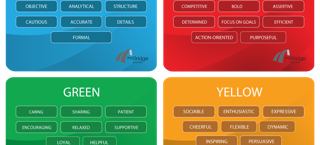
will help convincing clients of the value of their
advice. Consultants that perform well are seen as
trustworthy, loyal and professional. Therefore, it
is important that the knowledge of the consultant
is up-to-date. They cannot afford to be lacking in
product knowledge.
Matching Bridge dimensions:
• Strategic
• Results focused
• Methodical
• Convincing
• Insight
• Creativity
• Analytical
Sales employees with low scores 1-3
• Do not care about the specifics of the product
that they sell
• Do not tend to the demands and needs of their
clients
• May find it difficult to understand what is of
importance to the client
• Do not ‘tailor’ their advice to clients
Sales employees with high scores: 8-10
• Listen to their clients and actively analyse
their needs and demands
• Provide constructive advice that is built on
solid knowledge of the product
• Like to inform and consult their clients
• Tend to find it important that their clients
make the right choice and that their clients are
satisfied
• Know how to convince their clients and steer
their clients in the direction of the right choice
Skills to be trained
In order to become a better consultant the follow-
ing skills can be trained:
Analysing client needs
It is very important that a Consultant can analyse
different sources of information thoroughly. The
Consultant needs to understand the client’s needs,
expectations, requirements and problems. This can
be done by asking the right questions and gaining
a clear understanding of what motivates the client.
The aim is to build a complete picture of the
client’s situation and identify how the product or
service being offered can help solve the problem.
Providing advice
Consultants will need to study everything there
is to know about their product. They will need to
study the market and will also need to have up-to-
date knowledge on competitor products. They will
need to have a clear picture on the latest market
developments so that they can convey this knowl-
edge to their clients. The advice must be clear,
complete and understandable to the client.
22
Farmer
armers stay in touch with existing clients and
will try to extend the existing business with
these clients. They will try to keep this business
by building on the personal relationship with
this client and this way keeping the competitors
out. Quite often, the farmer is the fixed person of
contact for a certain number of clients. Farmers
will need to show a genuine interest in the client.
Farmers may like to cooperate with the client to
achieve common goals. To build and manage the
relationship with the client, farmers need to take
a considerate attitude toward the client. The client
will want to be understood, the farmer will do
anything to achieve this. In doing this, farmers
develop a long term relationship with the client
which is based on trust and loyalty. Farmers will
proactively contact their clients to inform them
about new developments or any other topics that
are worth mentioning. Because the farmer has a
close relation with the client, any trouble or dis-
satisfaction with the client is quickly noticed and
solved. Because the farmer has extensive knowl-
edge about the client, solutions to their problems
can be easily provided.
Matching Bridge dimensions:
• Results focused
• Networking
• Convincing
• Sociable
• Helpful
• Considerate
• Avoiding conflict
Sales employees with low scores 1-3
• Are not focused on the overall well-being of
clients
• Do not show genuine interest in details sur-
rounding the clients
• May be less helpful towards clients and may
not like to answer or attend to client questions
or complaints
• May not be easy going and do not try to avoid
conflicts
• Do not build a long term relationship with
clients
Sales employees with high scores: 8-10
• Are genuinely interested in other people and
enjoy social interaction
• Like to spend a lot of time on tending to client
needs, are focused on listening, tend to be
flexible and show understanding
• Are up-to-date on the situation at the client
• Will try to extend sales by approaching exist-
ing clients
• Give the client the feeling that they are special
and that the client gets a special treatment
Skills to be trained
For becoming a better Farmer the following skills
can be trained:
Listening skills
Active listening, paraphrasing and asking fol-
low-up questions are essential skills for Farm-
ers. This process starts with an open, active and
thoughtful attitude. Listening is not just about
hearing what the other person is saying. Farmers
also need to pay attention to non-verbal signals
and make an active effort to understand what the
client really means.
By briefly paraphrasing the client’s answers,
Farmers can check whether they have understood
the information correctly. Clients often appreciate
this because it shows genuine interest and atten-
tion.
Showing a helpful attitude
Farmers need to show clients that they are gen-
uinely interested in them and want to help solve
their problems. They ask questions to get a com-
plete picture of the client’s situation and then
proactively look for ways to help.
It is important that Farmers understand the cli-
ent’s problems so they can find the right solution.
Ideally, a Farmer anticipates the client’s needs and
solves a problem before the client has even asked
for help.
23
Negotiator
egotiators like to negotiate about sales deals.
To be able to be a good negotiator it is im-
portant that negotiators know the worth of their
product, what their market position is, what the
competition is offering and how their clients see
their product. Negotiators will have thought of
their negotiation plan in advance. They are pre-
pared for the research their clients have done. Ne-
gotiators will need to know why the clients want
their product and how far they are willing to go to
purchase it. During the process of negotiation the
negotiator is not talking about price but instead
about the value of the product. Negotiators will
need to be critical when judging information, are
good at debating and thinking of solutions. Very
important: negotiators will need to be patient.
During many negotiations more topics can be
discussed than price alone. To get the best possi-
ble deal, it is important that the negotiator listens
very carefully to the client. The best possible sales
deal is a win-win situation for both parties. During
the negotiation the negotiator will try to create a
relaxed atmosphere.
Matching Bridge dimensions:
• Self-confident
• Guiding
• Rational
• Critical
• Results focused
• Convincing
• Analytical
Sales employees with low scores 1-3
• Are not focussed on negotiating a proper sales
deal
• Do not have a strategic negotiating plan
• Are not open to the demands and needs of the
client
• Tend to find it difficult to defend their views,
prices and standpoints during a negotiation.
Sales employees with high scores: 8-10
• Like to negotiate sales deals
• Know the market position and value of the
products that they sell
• Will present the solutions that their product
can offer in an enthusiastic manner
• Listen to the client and can adapt their offer-
ing to the demands of the client
• Will tend to evaluate information in a critical
manner
• Are focused on achieving a win-win sales deal
with the client.
Skills to be trained
To become a better negotiator the following skills
can be trained:
Negotiating skills
A negotiation process is more likely to run
smoothly when it is seen as cooperation rather
than a battle. The salesperson needs to understand
the value of the product or service and know
which parts of the deal are open to negotiation and
which are not. During the negotiation, it is import-
ant to remain calm, keep emotions under control
and focus on the facts.
Communication
During the negotiation process, communication
is both verbal and non-verbal. It is important that
the negotiator comes across as trustworthy and is
able to respond effectively to client objections.
Developing strong verbal skills can help with this.
Staying relaxed and keeping emotions under con-
trol are also important for clear and professional
verbal and non-verbal communication.
24
Using Jung Types in Sales
our Jung Type is displayed in the Bridge
Personality 16 Jung Types report. If you do
not have this report, please contact your Bridge
Personality professional. A Jung Type will provide
information about preferences on four dimensions.
Each dimension is described with two letters. The
first dimension, Extraversion or Introversion,
indicates where people get their energy from. The
second dimension indicates what kind of informa-
tion people prefer, Sensing or Intuition. The third
dimension indicates how someone prefers to make
decisions: primarily through logic and objective
criteria (Thinking) or through values and consid-
eration of people (Feeling). The fourth dimension
indicates a preference on how decisions are made,
Judging or Perceiving. There are 16 Jung Types
in total, these are displayed on the next page. All
types have different preferences on communica-
tion and dealing with other people. This way, each
Jung Type has a different preference on dealing
with clients.
According to the Type theory of Jung, every
person has a Jung Type, clients as well. In order to
approach the client optimally it is important to use
the knowledge of the client’s Jung Type. The Jung
Type of the client will provide valuable informa-
tion on the four preferences of the client that can
be used during the sales process. This information
is important because it tells the sales person how
the client wants to be approached, how the client
processes information, how the client makes deci-
sions and how the client wants to finish the deal.
Communication with the client is essential for
creating a proper business deal. To get to an effec-
tive communication with the client, knowledge of
the client’s Jung type is very important. With this
knowledge, the sales person can adapt communi-
cation to the Jung Type of the client. Because it is
not known from the start what the Jung Type is, it
is important to focus and think of what this Jung
Type may be.
In order to determine the Jung Type of the client
the sales person will focus on four dimensions.
First, the sales person will need to determine if
the client gets energy from people (Extraversion)
or from internal thoughts (Introversion). Second,
the sales person needs to check how the client
processes information. This can be determined by
studying the way the client asks questions.
When these questions are focused on details, the
client probably has a preference for Sensing, If
these questions are focused on the complete pic-
ture or are directed towards the future, the client
may have a preference for Intuition.
Third, the sales person must check the way the
client is dealing with decisions. If these decisions
tend to be based on logic and rationality, the pref-
erence of the client is probably Thinking. When
the client likes to involve emotions and other
people’s interests into the decision making, the
preference is probably Feeling.
The last preference to determine is the client’s
preference on how to close the deal. When a client
is very strict on structuring the process of deal-
making, the client will probably want to finish the
deal and get on with new projects. This client may
have a preference for Judging. If the client does
not set firm deadlines and leaves options open, the
client may have a preference for Perceiving. If the
client has this preference, it is important to guide
the client strictly into closing the deal.
25
The Jung Typetable
ISTJ
Realist
They are hard-working, neat
and thorough. They can work
well within a traditional
structure, where there are
standard procedures and where
they can keep a good eye on the
details and facts. They like
efficient procedures, and find
traditions and loyalty important.
They enjoy arranging and
organising.
ISTP
Solver
Are tolerant, pragmatic and
flexible. They like rules and
the practical application of
their knowledge. They are
good at processing large
amounts of data and analysing
them to find the core of a
practical problem. They are
interested in cause and effect,
and can identify illogical or
inconsistent data or procedu-
res.
ESTP
Doer
Is friendly, can adapt easily
and is focused on action. His
or her goal is to get quick
results. They want to remove
obstacles through a pragmatic,
no-nonsense approach. They
often do not have the patience
to listen to a long explanation.
They have respect for, and are
loyal to their equals, but may
have little respect for rules.
ESTJ
Decision-maker
Are practical, directive,
business-like and organised.
They are good at organising
projects and they deploy
people in order to get things
done. They strive to achieve
results efficiently and have an
eye for detail in this. They
work hard, are responsible
and look for practical and
realistic solutions to
problems.
ESFJ
Service provider
Are helpful, warm and
friendly towards others and
enjoy working in a harmoni-
ous environment. They are
loyal and persevering, even in
less important matters. They
like to help others in a
practical way and adopt a
social position. They are
determined and want to be
appreciated for themselves
and for their contributions.
ENFJ
Coach
Are warm, empathetic and
friendly towards people. They
focus strongly on the emotions
and feelings of others. They
are loyal and sensitive to
compliments and criticism.
They are social and supportive
of others, and can inspire
people through their
leadership.
ENTJ
Leader
Are often outspoken,
assertive and quick to
assume leadership. They
enjoy managing projects and
bring order and logic to tasks
and work processes. They
like to make long-term plans
and goals. They invent
systems and processes for
solving organisational
problems.
ESFP
Performer
Are friendly, energetic and
enthusiastic. They can be
characterised as bon vivants,
and they gladly use humour
and vitality to get things
done. They like people and
(material) comfort. They
enjoy helping people, and use
their warmth and generosity
in this.
ENTP
Innovator
Are quick, alert and
straightforward. They are
creative in finding
solutions for difficult
situations or problems.
They are good at improvi-
sing and delivering new
concepts. They like
change, and do not like
routine. They do not often
do things the same way
twice.
ENFP
Inspirer
Warm, enthusiastic and often
charismatic and encouraging.
They enjoy being innovative
and creative, and motivating
others to take action or teaching
them new things. They look for
a lot of confirmation from
others, but are also quick to
give support and compliments
themselves.
ISFP
Peacemaker
They are calm, modest and
friendly. They focus on the
here and now, and on what
is happening in their
immediate surroundings.
They value harmony and
respect for one another. In
their work, they focus on
friendliness and creativity,
and on taking account of
colleagues.
INFP
Idealist
They are thoughtful,
idealistic and guided by
their values. They work
well in environments where
they have freedom to
follow their ideas and
contribute meaningfully.
They value authenticity,
personal growth and
harmony, and often seek
work that reflects their
beliefs and helps others.
INTP
Strategist
They are analytical and
look for logical explanati-
ons for everything they are
interested in. They like to
work independently and
enjoy searching for the
truth and solving complex
problems through a
rational approach. They
are theoretical and
abstract.
ISFJ
Carer
They are loyal, dedicated,
often calm and responsible.
They meet their obligations
and agreements. They like it if
roles and responsibilities are
clear and well divided. They
look for stability and harmony
in their dealings with others.
They are actively concerned
with other people’s feelings.
INFJ
Advisor
They often have great
insight and have a preferen-
ce for working creatively.
They try to understand what
motivates others. They keep
to their norms and values,
and are led by their consci-
ence. They try to make a
conscious effort for the
general interest and want to
develop an atmosphere of
mutual trust.
INTJ
Scholar
They are original, indepen-
dent and enthusiastic in
achieving their goals. They
like to develop strategies
and long-term plans and
are forward-looking in
general. They do not avoid
difficult and complex
situations. They see them
as more of a challenge and
are quick to perceive a
structure in them.
26
ISTJ Realist
The client (ISTJ) can be noticed by:
• I: Thinking first, then talking
• Takes a break during answering questions
or providing information
• Make the impression of extensive think-
ing during a meeting
• May not talk very loudly
• Uses short sentences, does not keep
talking.
• S: Focus on details
• Will ask for details, information and guid-
ance at each stage of the sales process.
• Will inform regarding the current situa-
tion
• Will ask ‘what’ and ‘how’ questions
• May use very clear and detailed descrip-
tions
• T: Logical decision making
• It may feel like they are testing your
knowledge about the product
• They may look at objective proof
• They are not impressed by other people’s
opinions
• During the meeting, this client will use
‘if-then’ logical reasoning
• J: Enjoy closing things
• They are impatient with long descriptions
or long procedures
• They create the following atmosphere:
‘hurry up, i want to make a choice’
• Will make premature or impulsive choices
• Is happy when the deal is closed so that
they can move on to new things
Communication
To make contact with an ISTJ, it is best to remain
calm and avoid too much movement. Speak at
a slower pace and do not provide too much in-
formation at once, as the Realist may need time
to process it. Give the Realist enough time and
opportunity to ask questions.
When providing information to a Realist it is
important to keep in mind how a Realist processes
information and how they make decisions. With
Realists this is determined by their preference for
S (Sensing) and T (thinking). Because of this you
should use impersonal words like ‘it’ and ‘the’
instead of words like ‘your’ or ‘mine’. Provide
specific details and remember facts. Ask ‘how’
and ‘what’ questions to get knowledge on the
needs of the client. Be prepared for critical ques-
tions. Inform a Realist on the objective benefits of
the product.
For successfully closing the deal, it is important
to focus on the last part of the Jung Type, for a
Realist this is J (Judging). Try to find out what the
goals of the client are and when these goals need
to be met. Prepare a time schedule and try to stick
to this schedule. Be prepared for pressure, applied
by the client to close the deal, however, ensure
that the client will not try to close the deal too
quickly.
Sales
To effectively sell products to an ISTJ, the sales
employee should provide factual information.
Keep it short, be objective, direct and honest. Pro-
vide information in a logical manner and stick to
the topic, avoid chit-chat at this stage. Make sure
that you know what you are saying and provide
information on the different possibilities to that
the client can make an objective choice. Write
down factual information such as numbers or per-
centages. Be prepared to be questioned on these
facts and details by the Realist.
For closing the deal it is important to use the pref-
erence of the Realist on closing a deal. When a
Realist has come to a decision they want to finish
the deal quickly. They will want to know infor-
mation on delivery dates and such. Realist seek
for closure of projects, that provides them with a
relaxed feeling.
27
ISFJ Carer
The client (ISFJ) can be noticed by:
• I: Thinking first, then talking
• Takes a break during answering questions
or providing information
• Make the impression of extensive think-
ing during a meeting
• May not talk very loudly
• Uses short sentences, does not keep
talking.
• S: Focus on details
• Will ask for details, information and
instructions at each stage of the sales
process.
• Will inform regarding the current situa-
tion
• Will ask ‘what’ and ‘how’ questions
• May use very clear and detailed descrip-
tions
• F: Socially oriented
• Is focused on harmony during interaction
• May talk about values
• Asks what other companies do or have
done
• Keeps others in mind when making deci-
sions
• J : Enjoy closing things
• They are impatient with long descriptions
or long procedures
• They create the following atmosphere:
‘hurry up, I want to make a choice’
• Will make premature or impulsive choices
• Is happy when the deal is closed so that
they can move on to new things
Communication
To make contact with an ISFJ, the salesperson
should remain calm and avoid appearing too busy
or making too many sudden movements. Keep the
pace of the conversation relaxed, speak more slow-
ly than usual and give the client enough time to
think. Show that you are genuinely focused on the
client and allow enough time to answer questions.
When providing information to a Carer, it is
important to think of the preference they have for
receiving information and the preference that they
have for making decisions.
With Carers, this is determined by their preference
for S (Sensing) and F (Feeling). Use personal
words such as ‘you’ and ‘your’, ask about the
client’s personal experiences and actively listen
to their story. Try to create harmony during the
conversation and look for points of agreement
with the Carer. Explain how similar clients made
their choices and show Carers that their needs and
opinions are important.
For successfully closing the deal, it is important to
focus on the last part of the Jung Type, for a carer
this is J (Judging). Try to find out what the goals
of the client are and when these goals need to be
met. Prepare a time schedule and try to stick to
this schedule. Be prepared for pressure, applied by
the client to close the deal, however, ensure that
the client will not try to close the deal too quickly.
Sales
For effectively selling to a carer, it is important for
a sales person to show personal involvement with
the sales process and the ISFJ. To achieve this, it
is important to listen carefully, create enough time
for the client and show complete attention. Be
honest, warm and friendly. Provide factual infor-
mation, but make it personal and remember what
the client said. Also provide practical information
and talk about the experience of other clients. Ex-
plain the possible options and give the client time
to make a choice.
When closing the deal it is important to consider
the preference of carers on closing things. When
Carers have come to a decision they will not
consider options. They will focus on finalizing
their chosen option. They will like clarity on the
product that they have bought and they do not like
surprises or changes after a deal has been made.
28
INFJ Advisor
The client (INFJ) can be noticed by:
• I: Thinking first, then talking
• Takes a break during answering questions
or providing information
• Make the impression of extensive think-
ing during a meeting
• May not talk very loudly
• Uses short sentences, does not keep
talking.
• N: The big picture
• They will ask for the goal of a specific
action
• May ask for the current and future conce-
quences of a sales deal
• Will ask the ‘why’ question
• May talk about possibilities and will try to
see the bigger picture
• F: Socially oriented
• Is focused on harmony during interaction
• May talk about values
• Asks what other companies do or have
done
• Keeps others in mind when making deci-
sions
• J : Enjoy closing things
• They are impatient with long descriptions
or long procedures
• They create the following atmosphere:
‘hurry up, i want to make a choice’
• Will make premature or impulsive choices
• Is happy when the deal is closed so that
they can move on to new things
Communication
To make contact with an Advisor, it is important
to take a reserved approach. Avoid making too
many body movements, do not speak too quickly
and keep the pace of the conversation slower than
usual. Advisors need time to consider the pros and
cons of a sales deal. Show genuine interest, give
them time to process the information and wait
patiently for a response.
To provide information to an advisor it is import-
ant to keep in mind their preference for processing
information (N/iNtuition) and their preference for
making decisions (F/Feeling). Try to support the
thoughts of the advisor.
This way, follow the thought of your client. Try
to act friendly and genuine. Only provide details
when the client asks for them and when they are
needed
For successfully closing the deal, it is important
to focus on the last part of the Jung Type, for an
advisor this is J (Judging). Try to find out what the
goals of the client are and when these goals need
to be met. Prepare a time schedule and try to stick
to this schedule. Be prepared for pressure, applied
by the client to close the deal, however, ensure
that the client will not try to close the deal too
quickly.
Sales
To effectively sell to an advisor it is important
that the sales employee supports the thoughts of
the advisor. Treat advisors with respect, like you
would treat a person with unique wishes and de-
mands. Listen carefully and appreciate the con-
siderations of the client. Take your time to discuss
these and be honest but fair. When the advisor
wants to consider other options, take this serious-
ly. Provide overall solutions, without providing
details. Treat the client as if this situation is com-
pletely unique for client. Try to be honest and try
to get to know the client as a person.
When closing the deal it is important to keep
in mind the preference of an advisor on closing
deals. Advisors may want to study things careful-
ly. When choices are made they want to finish the
project. They do not like things that are unclear
and they want to know what the status is of a deal.
29
INTJ Scholar
The client (INTJ) can be noticed by:
• I: Thinking first, then talking
• Takes a break during answering questions
or providing information
• Make the impression of extensive think-
ing during a meeting
• May not talk very loudly
• Uses short sentences, does not keep
talking.
• N: The big picture
• They will ask for the goal of a specific
action
• May ask for the current and future conce-
quences of a sales deal
• Will ask the ‘why’ question
• May talk about possibilities and will try to
see the bigger picture
• T: Logical decision making
• It may feel like they are testing your
knowledge about the product
• They may look at objective proof
• They are not impressed by other people’s
opinions
• During the meeting, this client will use
‘if-then’ logical reasoning
• J : Enjoy closing things
• They are impatient with long descriptions
or long procedures
• They create the following atmosphere:
‘hurry up, I want to make a choice’
• Will make premature or impulsive choices
• Is happy when the deal is closed so that
they can move on to new things
Communication
In order to contact a Scholar, it may be important to
take a reserved attitude. Preferably assume a quiet
posture. Give the scholar enough time to process
all the information that is provided. It is no problem
when there are quiet periods during the meeting.
When providing information to an INTJ it is import-
ant to keep in mind the preferences that the scholar
has on information processing (N/iNtuition)
and decision making (T/Thinking). Therefore use
impersonal words like ‘it’ and ‘the’ instead of
‘your’ and ‘mine’. Do not assume that the cli-
ents know what they want, but instead ask which
options the scholar has considered. Prepare to be
questioned on your knowledge and provide al-
ternatives. Provide information on the direct and
long term benefits of the product.
For successfully closing the deal, it is important to
focus on the last part of the Jung Type, for a scholar
this is J (Judging). Try to find out what the goals
of the client are and when these goals need to be
met. Prepare a time schedule and try to stick to this
schedule. Be prepared for pressure, applied by the
client to close the deal, however, ensure that the
client will not try to close the deal too quickly.
Sales
To effectively sell to a Scholar it is important that
the sales person tries to look professional and tries
to come up with logical options. Respect the need
of the scholar to understand things first, before a
deal is made. Show that you have product knowl-
edge and that you are professional. Try to answer
questions honestly and do not hide anything, the
scholar may find out the truth anyway. Provide
an overview of the possible options so that big
picture may emerge for the Scholar. Be informed
about the latest developments in the market and
show the INTJ that your information is up to
date. Do not expect personal contact, which may
emerge when the Scholar considers you adequate-
ly skilled. Try to imagine what the Scholar is
thinking and ask questions before you give advice.
When closing a deal with a Scholar, it is important
to understand how they like to close deals. Schol-
ars make well-thought-out decisions. Once a de-
cision has been made, they like to finalize things
as quickly as possible. Scholars like to make clear
choices and do not like to change them at a later
stage.
30
ISTP Solver
The client (ISTP) can be noticed by:
• I: Thinking first, then talking
• Takes a break during answering questions
or providing information
• Make the impression of extensive think-
ing during a meeting
• May not talk very loudly
• Uses short sentences, does not keep
talking.
• S: Focus on details
• Will ask for details, information and in-
struction in each step of the sales process
• Will inform regarding the current situa-
tion
• Will ask ‘what’ and ‘how’ questions
• May use very clear and detailed descrip-
tions
• T: Logical decision making
• It may feel like they are testing your
knowledge about the product
• They may look at objective proof
• They are not impressed by other people’s
opinions
• During the meeting, this client will use
‘if-then’ logical reasoning
• P: Likes to keep options open
• They may need time and space to look at
their own decision
• They may want to consider multiple op-
tions
• Will delay the decision about purchasing
to the last moment
• They like to think about all the options
Communication
In order to make contact with an ISTP the sales
person should take a reserved attitude. Try to keep
the pace of the conversation lower than usual and
give the client time to think things through. Show
genuine interest in the client and do not use silent
moments to start talking again.
When providing information to a solver it is
important to keep in mind how a solver processes
information and how they make decisions.
With solvers this is determined by their preference
for S (Sensing) and T (thinking). Because of this
you should use impersonal words like ‘it’ and ‘the’
instead of words like ‘your’ or ‘mine’. Provide
specific details and remember facts. Ask ‘how’
and ‘what’ questions to get knowledge on the
needs of the client. Be prepared for critical ques-
tions. Inform an ISTP on the objective benefits of
the product.
For successfully closing a deal with a solver it
is important to look at the last letter of the Jung
Type, which is a P (Perceiving) for solvers. A
solver likes to process information and take time
for this. Try to find out what your client’s prefer-
ence is on this dimension. If it is P, try to speed
up the decision-making process. Keep the time
table of the client in mind and adapt your actions
accordingly. Expect an acceleration of the client in
the last stage of the deal.
Sales
In order to effectively sell to a solver, it is im-
portant to provide factual information to a solver.
Keep it short and be direct and honest. Provide the
information in a logical manner and do not dwell
on other topics. Make sure that you know what
you are saying and provide the solver with the
different options that are possible. Also provide
written information on facts, numbers and per-
centages if needed. Expect to get questions or to
get challenged on your knowledge.
When closing a deal it is important to think of the
preference of a solver on the last letter of the Jung
Type (P/Perceiving). When solvers have closed
the deal they still want to look at any alternatives.
Solvers like to go for the best solution and would
like time to make their decision at the last mo-
ment.
31
ISFP Peace maker
The client (ISFP) can be noticed by:
• I: Thinking first, then talking
• Takes a break during answering questions
or providing information
• Make the impression of extensive think-
ing during a meeting
• May not talk very loudly
• Uses short sentences, does not keep
talking.
• S: Focus on details
• Will ask for details, information and in-
struction in each step of the sales process
• Will inform regarding the current situa-
tion
• Will ask ‘what’ and ‘how’ questions
• May use very clear and detailed descrip-
tions
• F: Socially oriented
• Is focused on harmony during interaction
• May talk about values
• Asks what other companies do or have
done
• Keeps others in mind when making deci-
sions
• P: Likes to keep options open
• They may need time and space to look at
their own decision
• They may want to consider multiple op-
tions
• Will delay the decision about purchasing
to the last moment
• They like to think about all the options
Communication
To make contact with an ISFP, is it important for
the sales person to take a reserved attitude. Do not
talk too fast and keep the pace of the conversation
lower than usual.
When providing information to a peace maker, it
is important to think of the preference they have
for receiving information and the preference that
they have for making decisions
With peace makers this is determined by their
preference for S(Sensing) and F (Feeling). There-
fore, you should use personal words like ‘your’
and ‘mine’. Ask for the personal experiences of
the client and actively listen to the story of the
client. Try to seek harmony during the conversa-
tion and seek points of agreement with the peace
maker. Tell the client how comparable clients
came to their choices and show peace makers that
they are important.
For successfully closing a deal with a peace maker
it is important to look at the last letter of the Jung
Type, which is a P (Perceiving) for peace makers.
A peace maker likes to process information and
take time for this. Try to find out what the prefer-
ence of your client is on this dimension and if it
is P, try to speed up the decision making process.
Keep the time table of the client in mind and
adapt your actions accordingly. Expect an acceler-
ation of the client in the last stage of the deal.
Sales
For effectively selling to a peace maker it is
important for the sales person to provide personal
service. Listen very carefully, free up time for the
client and give the client your full attention. Be
honest, warm and friendly. Provide factual infor-
mation but make it personal, remember everything
a client tells you. Provide practical information,
for instance focus on experiences of other custom-
ers. Give a clear description of all the options and
give the client the time to make a decision.
When closing the deal with a peace maker, it is
important to remember their preference on final-
izing things (P/Perceiving). Peace keepers like to
see all the options and want all information about
it. They do not like to leave options out. They may
want to consider other options, even after a deal is
struck. Peace keepers like to keep options open so
that decisions are not made too early.
32
INFP Idealist
The client (INFP) can be noticed by:
• I: Thinking first, then talking
• Takes a break during answering questions
or providing information
• Make the impression of extensive think-
ing during a meeting
• May not talk very loudly
• Uses short sentences, does not keep
talking
• N: The big picture
• They will ask for the goal of a specific
action
• May ask for the current and future conce-
quences of a sales deal
• Will ask the ‘why’ question
• May talk about possibilities and will try to
see the bigger picture
• F: Socially oriented
• Is focused on harmony during interaction
• May talk about values
• Asks what other companies do or have
done
• Keeps others in mind when making deci-
sions
• P: Likes to keep options open
• They may need time and space to look at
their own decision
• They may want to consider multiple op-
tions
• Will delay the decision about purchasing
to the last moment
• They like to think about all the options
Communication
To make contact with an INFP the sales person
should take a reserved posture. Try to talk at a
slow pace so that the information can be processed
by the Idealist. Wait for a reaction from the ideal-
ist and do not keep talking.
To provide information to an idealist it is import-
ant to keep in mind their preference for processing
information (N/iNtuition) and their preference for
making decisions (F/Feeling). Try to support the
thoughts of the idealist.
This way, follow the thought of your client. Try
to act friendly and genuine. Only provide details
when the client asks for them and when they are
needed.
For successfully closing a deal with an idealist it
is important to look at the last letter of the Jung
Type, which is a P (Perceiving) for idealists. An
idealist likes to process information and take time
for this. Try to find out what the preference of
your client is on this dimension and if it is P, try
to speed up the decision making process. Keep
the time table of the client in mind and adapt your
actions accordingly. Expect an acceleration of the
client in the last stage of the deal.
Sales
To effectively sell to idealists the best strategy
is to support their thoughts and thinking process
in general. Treat the idealist with respect, like a
person with a unique set of demands and needs.
Listen carefully and appreciate the considerations
of the client. Take your time to discuss these and
be friendly but honest. When the client wants to
discuss other options, take this seriously. Provide
an overall solution, without too many details.
Treat the client like the situation is unique. Try to
be genuine and try to get to know the client as a
person.
After closing the deal, it is important to keep in
mind how INFPs like to finalize things. After
making their choice an idealist may have need for
information on other options. Idealists like to keep
their options open until the last moment.
33
INTP Strategist
The client (INTP) can be noticed by:
• I: Thinking first, then talking
• Takes a break during answering questions
or providing information
• Make the impression of extensive think-
ing during a meeting
• May not talk very loudly
• Uses short sentences, does not keep
talking.
• N: The big picture
• They will ask for the goal of a specific
action
• May ask for the current and future conce-
quences of a sales deal
• Will ask the ‘why’ question
• May talk about possibilities and will try to
see the bigger picture
• T: Logical decision making
• It may feel like they are testing your
knowledge about the product
• They may look at objective proof
• They are not impressed by other people’s
opinions
• During the meeting, this client will use
‘if-then’ logical reasoning
• P: Likes to keep options open
• They may need time and space to look at
their own decision
• They may want to consider multiple options
• Will delay the decision about purchasing
to the last moment
• They like to think about all the options
Communication
In order to contact a strategist it may be of impor-
tance to take a reserved attitude. Preferably as-
sume a quiet posture. Give the INTP enough time
to process all the information that is provided. It
is no problem when there are quiet periods during
the meeting.
When providing information to an INTP it is import-
ant to keep in mind the preferences that the strategist
has on information processing (N/iNtuition) and
decision making (T/Thinking). Therefore use im-
personal words like ‘it’ and ‘the’ instead of ‘your’
and ‘mine’. Do not assume that clients already know
what they want. Instead, ask which options the Strat-
egist has considered. Be prepared for detailed ques-
tions about your knowledge and expertise, and offer
alternative solutions where appropriate. Provide clear
information about both the immediate and long-term
benefits of the product.
For successfully closing a deal with a strategist it
is important to look at the last letter of the Jung
Type, which is a P (Perceiving) for strategists. A
strategist likes to process information and take
time for this. Try to find out what your client’s
preference is on this dimension. If it is P, try to
speed up the decision-making process. Keep the
time table of the client in mind and adapt your
actions accordingly. Expect an acceleration of the
client in the last stage of the deal.
Sales
To sell effectively to a Strategist, the salesperson
should maintain a professional approach and present
clear, logical options. Respect the Strategist’s need to
understand how things work and their ability to anal-
yse information critically. Demonstrate strong prod-
uct knowledge and professionalism, and give honest
and accurate answers to questions, as the Strategist is
likely to investigate the facts independently. Pres-
ent the available options clearly so that a complete
picture emerges and make sure you are up to date
with the latest developments in the market. Do not
rely too much on personal contact, as the Strategist
will usually value this only after being convinced of
your professionalism and expertise. Try to follow the
client’s thought process and ask questions to under-
stand their reasoning before providing advice.
When closing the deal it is important to keep in
mind the preference of strategist on finalizing
things (P/Perceiving). After strategists have made
their choice they still want to consider other op-
tions. They prefer to keep their options open.
34
ESTP Doer
The client (ESTP) can be noticed by:
• E: No restrictions on verbal communication
• Likes to talk a lot and likes to talk fast
• It may appear that they are thinking out
loud
• They may not let you finish talking and
they will interrupt you to have their say
• They may talk loud
• S: Focus on details
• Will ask for details, information and guid-
ance at each stage of the sales process
• Will inform regarding the current situa-
tion
• Will ask ‘what’ and ‘how’ questions
• May use very clear and detailed descrip-
tions
• T: Logical decision making
• It may feel like they are testing your
knowledge about the product
• They may look at objective proof
• They are not impressed by other people’s
opinions
• During the meeting, this client will use
‘if-then’ logical reasoning
• P: Likes to keep options open
• They may need time and space to look at
their own decision
• They may want to consider multiple op-
tions
• Will delay the decision about purchasing
to the last moment
• They like to think about all the options
Communication
To make contact with a Doer it is important for the
sales person to take an open attitude and to make
an enthusiastic impression. Let the doer speak,
they like that. Ask open questions, listen carefully
and finalize with a short summary.
When providing information to an ESTP it is
important to keep in mind how an ESTP processes
information and how they make decisions.
With ESTPs this is determined by their preference
for S (Sensing) and T (thinking). Because of this
you should use impersonal words like ‘it’ and ‘the’
instead of words like ‘your’ or ‘mine’. Provide
specific details and remember facts. Ask ‘how’
and ‘what’ questions to get knowledge on the
needs of the client. Be prepared for critical ques-
tions. Inform Doers about the objective benefits of
the product.
For successfully closing a deal with a Doer it
is important to look at the last letter of the Jung
Type, which is a P (Perceiving) for Doers. An
ESTP likes to process information and take time
for this. Try to find out what the preference of
your client is on this dimension and if it is P, try
to speed up the decision making process. Keep
the time table of the client in mind and adapt your
actions accordingly. Expect an acceleration of the
client in the last stage of the deal.
Sales
To sell effectively to a Doer, the salesperson
should focus on providing factual information.
Keep the communication short, direct and hon-
est, and present information in a clear and logical
manner without dwelling on irrelevant topics.
Make sure you know what you are talking about
and explain the different solutions so that the cli-
ent can compare the available options. Use con-
crete facts such as numbers, percentages and other
relevant data whenever possible. Be prepared for
questions and expect the Doer to test your knowl-
edge and expertise.
When closing the deal it is important to keep in
mind how doers like to finalize things. When
ESTPs have made up their mind they like the
opportunity to change their choice. They like to
have enough time and information to make their
choices.
35
ESFP Performer
The client (ESFP) can be noticed by:
• E: No restrictions on verbal communication
• Likes to talk a lot and likes to talk fast
• It may appear that they are thinking out
loud
• They may not let you finish talking and
they will interrupt you to have their say
• They may talk loud
• S: Focus on details
• Will ask for details, information and in-
struction in each step of the sales process
• Will inform regarding the current situa-
tion
• Will ask ‘what’ and ‘how’ questions
• May use very clear and detailed descrip-
tions
• F: Socially oriented
• Is focused on harmony during interaction
• May talk about values
• Asks what other companies do or have
done
• Keeps others in mind when making deci-
sions
• P: Likes to keep options open
• They may need time and space to look at
their own decision
• They may want to consider multiple op-
tions
• Will delay the decision about purchasing
to the last moment
• They like to think about all the options
Communication
To make contact with an ESFP it may be import-
ant for a sales employee to appear energetic in
terms of expression, use of voice, posture and
movements. Make sure that you do this in a natu-
ral way. Spend enough time listening to the client.
Make sure that you ask open questions, show gen-
uine interest and make sure that you understand
the client.
When providing information to an ESFP, it is
important to think of the preference they have for
receiving information and the preference that they
have for making decisions.
With ESFPs, this is determined by their prefer-
ence for S (Sensing) and F (Feeling). Therefore,
use personal words such as ‘your’ and ‘mine’.
Ask about the client’s personal experiences and
actively listen to their story. Try to create harmo-
ny during the conversation and look for points
of agreement with the Performer. Explain how
comparable clients came to their decisions and
make the Performer feel that they and their needs
are important.
For successfully closing a deal with Performers
it is important to look at the last letter of the Jung
Type, which is a P (Perceiving) for performers. A
performer likes to process information and take
time for this. Try to find out what the preference
of your client is on this dimension and if it is P,
try to speed up the decision making process. Keep
the time table of the client in mind and adapt your
actions accordingly. Expect an acceleration of the
client in the last stage of the deal.
Sales
To sell effectively to a Performer, it is important
to provide personal service. Listen carefully, make
enough time for the conversation and give the cli-
ent your full attention. Be fair, warm and friendly.
Provide factual information, but present it in a
personal way and remember what the client tells
you. Also provide practical information, use ex-
amples and share the experiences of other clients.
Explain the different options clearly and give the
client enough time to make a decision.
When closing a deal, it is important to remem-
ber how Performers like to close things (P/Per-
ceiving). Performers want to prevent that wrong
decisions are made. Therefore, they like to delay
making choices and they like to get a lot of infor-
mation. Performers like choices not to be definite,
they like to keep their options open.
36
ENFP Inspirer
The client (ENFP) can be noticed by:
• E: No restrictions on verbal communication
• Likes to talk a lot and likes to talk fast
• It may appear that they are thinking out
loud
• They may not let you finish talking and
they will interrupt you to have their say
• They may talk loud
• N: The big picture
• They will ask for the goal of a specific
action
• May ask for the current and future conce-
quences of a sales deal
• Will ask the ‘why’ question
• May talk about possibilities and will try to
see the bigger picture
• F: Socially oriented
• Is focused on harmony during interaction
• May talk about values
• Asks what other companies do or have
done
• Keeps others in mind when making deci-
sions
• P: Likes to keep options open
• They may need time and space to look at
their own decision
• They may want to consider multiple op-
tions
• Will delay the decision about purchasing
to the last moment
• They like to think about all the options
Communication
To make contact with an ENFP, it is important for
the salesperson to communicate enthusiastically.
Ensure that there is a good balance in the conver-
sation, with both the salesperson and the client
having enough opportunity to speak and share
their ideas.
When providing information to Inspirers, it is
important to keep in mind their preference for
processing information (N/iNtuition) and making
decisions (F/Feeling). Try to support the Inspirer’s
ideas and thoughts. Ask about the client’s expe-
riences and what they want to achieve. Repeat
the client’s point of view in your own words and
make sure the client knows that you understand
their perspective.
This way, follow the thought of your client. Try
to act friendly and genuine. Only provide details
when the client asks for them and when they are
needed.
For successfully closing a deal with inspirers it
is important to look at the last letter of the Jung
Type, which is a P (Perceiving) for inspirers. An
inspirer likes to process information and take time
for this. Try to find out what your client’s prefer-
ence is on this dimension. If it is P, try to speed
up the decision-making process. Keep the time
table of the client in mind and adapt your actions
accordingly. Expect an acceleration of the client in
the last stage of the deal.
Sales
To sell effectively to an ENFP, it is important to
support Inspirers in their thoughts and ideas. Treat
the Inspirer with respect and as an individual with
a unique set of needs and expectations. Listen
carefully, appreciate the client’s thought process
and take the time to discuss their ideas. Be friend-
ly, open and honest. If the client wants to explore
other options, be willing to discuss them. Focus on
providing an overall solution and a clear overview
rather than too many details. Treat the client’s
situation as unique, be genuine and take the time
to get to know the client as a person.
When closing the deal it is important to keep in
mind how Inspirers finalize things (P/Perceiving).
Inspirers like options and information about the
options. Inspirers may have a difficult time mak-
ing decisions and therefore like to keep their op-
tions open. They may delay their choice until they
have enough information to make a choice.
37
ENTP Innovator
The client (ENTP) can be noticed by:
• E: No restrictions on verbal communication
• Likes to talk a lot and likes to talk fast
• It may appear that they are thinking out
loud
• They may not let you finish talking and
they will interrupt you to have their say
• They may talk loud
• N: The big picture
• They will ask for the goal of a specific
action
• May ask for the current and future conce-
quences of a sales deal
• Will ask the ‘why’ question
• May talk about possibilities and will try to
see the bigger picture
• T: Logical decision making
• It may feel like they are testing your
knowledge about the product
• They may look at objective proof
• They are not impressed by other people’s
opinions
• During the meeting, this client will use
‘if-then’ logical reasoning
• P: Likes to keep options open
• They may need time and space to look at
their own decision
• They may want to consider multiple op-
tions
• Will delay the decision about purchasing
to the last moment
• They like to think about all the options
Communication
To make contact with an ENTP it is important for
the sales person to take an open attitude and to
make an enthusiastic impression. Let the innova-
tor speak, they like that. Ask open questions, listen
carefully and finalize with a short summary.
When providing information to an innovator it is
important to keep in mind the preferences that the
ENTP has on information processing (N/iNtuition)
and decision making (T/Thinking). Therefore use
impersonal words like ‘it’ and ‘the’ instead of
‘your’ and ‘mine’. Do not assume that the cli-
ents know what they want, but instead ask which
options the ENTP has considered. Prepare to be
questioned on your knowledge and provide al-
ternatives. Provide information on the direct and
long term benefits of the product.
For successfully closing a deal with ENTPs it
is important to look at the last letter of the Jung
Type, which is a P (Perceiving) for innovators. An
innovator likes to process information and take
time for this. Try to find out what the preference
of your client is on this dimension and if it is P,
try to speed up the decision making process. Keep
the time table of the client in mind and adapt your
actions accordingly. Expect an acceleration of the
client in the last stage of the deal.
Sales
To effectively sell to an Innovator the sales person
needs to focus on a professional attitude and on
providing logical options. Respect the need for
understanding and the cognitive abilities of the
ENTP. Show your product knowledge and your
professionalism. Provide honest answers to ques-
tions, the innovator will find out the truth anyway.
Provide an overview of the options so that a total
picture emerges. Ensure that you are up to date on
the latest developments in the market. Do not ex-
pect personal contact. The client will only accept
this once they are convinced of your professional-
ism. Try to follow the thinking process of the cli-
ent and ask questions before you provide advice.
When closing a deal, it is important to remember
how ENTPs like to close things (P/Perceiving).
Innovators want to prevent that wrong decisions
are made. Therefore, they like to delay making
choices and they like to get a lot of information.
Innovators like choices not to be definite, they like
to keep their options open.
38
ESTJ Decision-Maker
The client (ESTJ) can be noticed by
• E: No restrictions on verbal communication
• Likes to talk a lot and likes to talk fast
• It may appear that they are thinking out
loud
• They may not let you finish talking and
they will interrupt you to have their say
• They may talk loud
• S: Focus on details
• Will ask for details, information and in-
struction in each step of the sales process
• Will inform regarding the current situation
• Will ask ‘what’ and ‘how’ questions
• May use very clear and detailed descrip-
tions
• T: Logical decision making
• It may feel like they are testing your
knowledge about the product
• They may look at objective proof
• They are not impressed by other people’s
opinions
• During the meeting, this client will use
‘if-then’ logical reasoning
• J: Enjoy closing things
• They are impatient with long descriptions
or long procedures
• They create the following atmosphere:
‘Hurry up, I want to make a choice.’
• Will make premature or impulsive choices
• Is happy when the deal is closed so that
they can move on to new things
Communication
To make contact with an ESTJ it is important
for the sales person to take an open attitude and
to make an enthusiastic impression. Let the de-
cision-maker speak, they like that. Ask open
questions, listen carefully and finalize with a
short summary. When providing information to
a decision-maker it is important to keep in mind
how a decision-maker processes information and
how they make decisions.
With ESTJs this is determined by their preference
for S (Sensing) and T (thinking). Because of this
you should use impersonal words like ‘it’ and ‘the’
instead of words like ‘your’ or ‘mine’. Provide
specific details and remember facts. Ask ‘how’
and ‘what’ questions to get knowledge on the
needs of the client. Be prepared for critical ques-
tions. Inform a decision-maker on the objective
benefits of the product.
For successfully closing the deal, it is important to
focus on the last part of the Jung Type, for a deci-
sion-maker this is J (Judging). Try to find out what
the goals of the client are and when these goals
need to be met. Prepare a time schedule and try to
stick to this schedule. Be prepared for pressure,
applied by the client to close the deal, however,
ensure that the client will not try to close the deal
too quickly.
Sales
To effectively sell products to an ESTJ, the sales
employee should provide factual information.
Keep it short, be objective, direct and honest. Pro-
vide information in a logical manner and stick to
the topic, avoid chit-chat at this stage. Make sure
that you know what you are saying and provide
information on the different possibilities so that
the client can make an objective choice. Write
down factual information such as numbers or per-
centages. Be prepared to be questioned on these
facts and details by the decision-maker.
For closing the deal it is important to use the pref-
erence of the Decision-maker on closing a deal.
When a decision-maker has come to a decision
they want to finish the deal quickly. They will
want to know information on delivery dates and
such. Decision-makers seek closure of projects,
that provides them with a relaxed feeling.
39
ESFJ Service Provider
The client (ESFJ) can be noticed by:
• E: No restrictions on verbal communication
• Likes to talk a lot and likes to talk fast
• It may appear that they are thinking out
loud
• They may not let you finish talking and
they will interrupt you to have their say
• They may talk loud
• S: Focus on details
• Will ask for details, information and in-
struction in each step of the sales process
• Will inform regarding the current situation
• Will ask ‘what’ and ‘how’ questions
• May use very clear and detailed descrip-
tions
• F: Socially oriented
• Is focused on harmony during interaction
• May talk about values
• Asks what other companies do or have
done
• Keeps others in mind when making deci-
sions
• J: Enjoy closing things
• They are impatient with long descriptions
or long procedures
• They create the following atmosphere:
‘hurry up, i want to make a choice’
• Will make premature or impulsive choices
• Is happy when the deal is closed so that
they can move on to new things
Communication
To make contact with an ESFJ it may be important
for a sales employee to appear energetic in terms of
expression, use of voice, posture and movements.
Make sure that you do this in a natural way. Spend
enough time listening to the client. Make sure that
you ask open questions, show genuine interest and
make sure that you understand the client.
When providing information to an ESFJ, it is
important to think of the preference they have for
receiving information and the preference that they
have for making decisions.
With ESFJs, this is determined by their prefer-
ence for S (Sensing) and F (Feeling). Therefore,
use personal words such as ‘your’ and ‘mine’.
Ask about the client’s personal experiences and
actively listen to their story. Try to create harmo-
ny during the conversation and look for points of
agreement with the Service Provider. Explain how
comparable clients came to their decisions and
make sure the Service Provider feels that they and
their needs are important.
For successfully closing the deal, it is important
to focus on the last part of the Jung Type, for a
Service provider this is J (Judging). Try to find
out what the goals of the client are and when these
goals need to be met. Prepare a time schedule
and try to stick to this schedule. Be prepared for
pressure, applied by the client to close the deal,
however, ensure that the client will not try to close
the deal too quickly.
Sales
To sell effectively to a Service provider, it is
important for the salesperson to show personal in-
volvement in both the sales process and the client.
Listen carefully, make enough time for the con-
versation and give the client your full attention.
Be honest, warm and friendly. Provide factual
information, but present it in a personal way and
remember what the client tells you. Also provide
practical information and share the experiences of
other clients. Explain the available options clearly
and give the client enough time to make a deci-
sion.
When closing the deal it is important to consider
the preference of service providers on closing
things. When service providers have come to a
decision they will not consider options. They will
focus on finalizing their chosen option. They will
like clarity on the product that they have bought
and they do not like surprises or changes after a
deal has been made.
40
ENFJ Coach
The client (ENFJ) can be noticed by:
• E: No restrictions on verbal communication
• Likes to talk a lot and likes to talk fast
• It may appear that they are thinking out
loud
• They may not let you finish talking and
they will interrupt you to have their say
• They may talk loud
• N: The big picture
• They will ask for the goal of a specific
action
• May ask for the current and future conce-
quences of a sales deal
• Will ask the ‘why’ question
• May talk about possibilities and will try to
see the bigger picture
• F: Socially oriented
• Is focused on harmony during interaction
• May talk about values
• Asks what other companies do or have
done
• Keeps others in mind when making deci-
sions
• J: Enjoy closing things
• They are impatient with long descriptions
or long procedures
• They create the following atmosphere:
‘Hurry up, I want to make a choice.’
• Will make premature or impulsive choices
• Is happy when the deal is closed so that
they can move on to new things
Communication
To make contact with an ENFJ it is important for
the sales person to take an open attitude and to
make an enthusiastic impression. Let the coach
speak, they like that. Ask open questions, listen
carefully and finalize with a short summary.
To provide information to a coach it is important
to keep in mind their preference for processing
information (N/iNtuition) and their preference for
making decisions (F/Feeling). Try to support the
thoughts of the coach.
This way, follow the thought of your client. Try
to act friendly and genuine. Only provide details
when the client asks for them and when they are
needed.
For successfully closing the deal, it is important to
focus on the last part of the Jung Type, for a coach
this is J (Judging). Try to find out what the goals
of the client are and when these goals need to be
met. Prepare a time schedule and try to stick to
this schedule. Be prepared for pressure, applied by
the client to close the deal, however, ensure that
the client will not try to close the deal too quickly.
Sales
To effectively sell to an ENFJ it is important that
the sales employee supports the thoughts of the
Coach. Treat coaches with respect, like you would
treat a person with unique wishes and demands.
Listen carefully and appreciate the considerations
of the client. Take your time to discuss these
and be honest but fair. When the coach wants to
consider other options, take this seriously. Provide
overall solutions, without providing details. Treat
the client as if this situation is completely unique
for client. Try to be honest and try to get to know
the client as a person.
When closing the deal it is important to keep in
mind the preference of a coach on closing deals.
Coaches may want to study things carefully. When
choices are made they want to finish the project.
They do not like things that are unclear and they
want to know what the status is of a deal.
41
ENTJ Leader
The client (ENTJ) can be noticed by:
• E: No restrictions on verbal communication
• Likes to talk a lot and likes to talk fast
• It may appear that they are thinking out
loud
• They may not let you finish talking and
they will interrupt you to have their say
• They may talk loud
• N: The big picture
• They will ask for the goal of a specific
action
• May ask for the current and future conce-
quences of a sales deal
• Will ask the ‘why’ question
• May talk about possibilities and will try to
see the bigger picture
• T: Logical decision making
• It may feel like they are testing your
knowledge about the product
• They may look at objective proof
• They are not impressed by other people’s
opinions
• During the meeting, this client will use
‘if-then’ logical reasoning
• J: Enjoy closing things
• They are impatient with long descriptions
or long procedures
• They create the following atmosphere:
‘Hurry up, I want to make a choice.’
• Will make premature or impulsive choices
• Is happy when the deal is closed so that
they can move on to new things
Communication
To make contact with an ENTJ it is important for
the sales person to take an open attitude and to
make an enthusiastic impression. Let the leader
speak, they like that. Ask open questions, listen
carefully and finalize with a short summary. When
providing information to a leader it is important to
keep in mind how a leader processes information
and how they make decisions.
When providing information to an ENTJ it is
important to keep in mind the preferences that
the Leader has on information processing (N/
iNtuition) and decision making (T/Thinking).
Therefore, use impersonal words like ‘it’ and ‘the’
instead of ‘your’ and ‘mine’. Do not assume that
the clients know what they want, but instead ask
which options the leader has considered. Prepare
to be questioned on your knowledge and provide
alternatives. Provide information on the direct and
long term benefits of the product.
For successfully closing the deal, it is important
to focus on the last part of the Jung Type, for a
Leader this is J (Judging). Try to find out what the
goals of the client are and when these goals need
to be met. Prepare a time schedule and try to stick
to this schedule. Be prepared for pressure, applied
by the client to close the deal, however, ensure
that the client will not try to close the deal too
quickly.
Sales
To sell effectively to a Leader, maintain a profes-
sional approach and provide clear, logical options.
Respect the Leader’s need to understand the situa-
tion before making a decision. Demonstrate strong
product knowledge, answer questions honestly
and provide an overview of the available options.
Stay up to date with market developments and
focus on expertise rather than personal contact.
Ask questions to understand the Leader’s thinking
before providing advice.
When closing a deal with a Leader it is important
to understand how an ENTJ likes to close deals.
Leaders make well-thought-out decisions. Once
a decision has been made, they like to finalize
things as quickly as possible. Leaders like to
make clear choices and do not like to change these
choices at a later stage.
42
Jung Type and Sales Types
ll sales persons will benefit from studying
the Jung Type of their clients. It is important
to know that the four sales types are independent
of the 16 Jung Types that clients may have. Thus,
many different combinations are possible. Some
possible combinations are discussed below.
Hunters are known as fast sales types. Therefore
they may have trouble with clients that have a
preference for P (Perceiving). These clients need a
lot of information and will not come to a decision
fast. Because of this, the sales process will take
more time and may end in delaying the choice.
Hunters will like to do business with clients that
have a preference for Judging. These clients will
come to a deal quickly. That will save a lot of time
and the Hunter will know exactly what the result
is.
Consultants provide advice to clients. For them, it
is very important to keep in mind how the client
processes information and how the client takes
decisions. Consultants will not have a clear pref-
erence for a Jung Type. While preparing their
presentation they may benefit from the knowledge
that their client has a preference for Thinking.
This enables them to focus on logic, rationality
and objective criteria. This is in contrast to clients
with a preference for Feeling. These clients will
prefer a personal touch and prefer subjective crite-
ria. With these clients the consultant will need to
keep in mind their need for a personal orientation.
Farmers focus on managing business relation-
ships. They will show genuine interest in clients
and provide service to existing clients. Managing
client relations will be easier with clients with
a preference for Feeling. These clients value a
personal approach and take into account what is
important to others. They will also share person-
al details more easily. Clients with a preference
for Thinking will be more rational and direct.
This makes it more difficult for a farmer to make
personal contact. By being helpful the farmer will
nevertheless be able to manage a tight business
relationship.
Negotiators will not have a preference for a cer-
tain Jung Type. How diplomatic or direct a nego-
tiator should be during a negotiation, depends on
the preference of the client for either T(Thinking)
or F(Feeling). The negotiator will also take into
account the preference of the client on finalizing
things. Clients with a preference for Judging will
have a need for structure and a strict time sched-
ule. Clients with a preference for Perceiving leave
room for changes and will get back to previously
discussed topics.
43
Jung Type and Sales Types
ung Types are dynamic. They provide infor-
mation on an interaction between preferences.
A sales person may act based on the preferences
of the Jung Type. Please note that clients will not
always act according to the preferences of their
Jung Type. This behavior can be influenced by
the product or the context of the situation. For
instance, a strategist will take less time to do
research into possible products when they are in
a hurry or when they purchase small things like
batteries. Decision makers will take more time to
do research when they may want to buy a house.
Nevertheless, small differences between the Jung
Types exist. A strategist will be more sensitive
to comparing products, even when the product
is small. A decision maker will be able to decide
on purchasing a house relatively quickly. There-
fore, studying the Jung Type of your client is very
useful.
When a sales person adapts to the Jung Type of
the client, the client will feel more relaxed during
the interaction and will more easily proceed to
purchasing the product. Try to think how you
would feel if a sales person treats you on the basis
of your Jung Type and what influence this may
have on your consumer behavior and satisfaction
with the product.
In the Bridge Personality Extended report, the
Jung type of the sales person is displayed. It may
very well be that a person has a different Jung
Type at work or a different Jung Type at home.
The Jung Type that is reported is based on prefer-
ences at work.
Within a sales team it can be worthwhile to be
aware of each other’s Jung Type. More insight
into the communication style of team members
should lead to more mutual understanding, more
effective decision making and higher-quality
output.
To get a more complete picture of the use of the
Bridge products in sales, please use the following
reports and books:
Reports:
• The Bridge Personality: Sales report
• The Bridge Personality: Big Five + 16 Jung
Type report
• The Bridge Personality: Big Five + 4 color
report
• The Bridge Personality: Big Five + 16 Jung
Type + 4 color report
• The Bridge 360 (Sales module)
Books:
• The Bridge Personality: the book for candi-
dates
• The Bridge Personality: the book for sales
44
Using the 4-Colour Model in Sales
he 4-colour personality model is a simple way
to understand your own behaviour and that
of others. Everyone uses all four colours, but the
combination is different for each person.
Blue: Analytical, objective, accurate and de-
tail-focused.
Green: Calm, caring, supportive and relation-
ship-focused.
Yellow: Enthusiastic, expressive, creative and
energetic.
Red: Decisive, assertive, action-oriented and
result-focused.
Your colour scores are based on your answers in
The Bridge Personality assessment. They show
how you naturally prefer to think, work and com-
municate.
In sales, these preferences can influence how you
approach and communicate with customers. Blue
customers often look for facts and details, while
Red customers focus more on speed and results.
Yellow customers respond well to enthusiasm and
possibilities, while Green customers value trust
and personal attention.
Recognising these differences helps you under-
stand what a customer needs and adapt your sales
approach accordingly.
Everyone has a preference for all four colours,
but usually one colour is dominant. At the same
time, you are never just one colour. In sales, you
use different colours depending on the customer,
the situation and the stage of the sales process. For
example, you may use more Yellow when making
contact, more Blue when discussing details, or
more Red when moving towards a decision.
Your scores in the 4-colour model are calculated
using both normative and ipsative measurement
methods. Together, they provide a more complete
picture of how naturally you can use each colour
in sales.
Normative preferences reflect the sales behaviour
you consciously choose to show. This can be
influenced by your role, experience and what you
believe is expected of you.
Ipsative preferences show your more natural and
instinctive behaviour. They indicate which colours
you are likely to use automatically during a sales
conversation, especially when you are not con-
sciously adapting your behaviour.
Scores above 3 indicate colours you can use
naturally and with relatively little effort. Scores
below 3 indicate colours that may require more
conscious effort. Being aware of this can help you
adapt your sales behaviour to different customers
and sales situations.
Green
66,67%
Red
61,67%
Blue
71,67%
Yellow
68,33%
3.7
4.1
4.3
Green Red
65,00% 58,33%
Blue
71,67%
Yellow
60,00%
3,9
3,5
3,6
4,3
Normative (intentional) preference Ipsative (less intentional) preference
Figure 1: Example of normative and ipsative colour preferences in The Bridge Personality.
45
Using the 4-Colour Model in Sales
By linking the Thinking and Feeling preferences
with Extraversion and Introversion, eight prefer-
ence types are formed in the colour wheel. These
types reflect different ways of communicating and
interacting with customers during the sales pro-
cess.
Next, three rings are added. The 4 colours, 8 main
types and 24 subtypes result in 72 positions in the
colour wheel.
Each subtype has a unique order of colours that
reflects its preferred sales behaviour and commu-
nication style. The distribution across the rings
shows the relative focus or spread of the first three
preferred colours and provides a more detailed
picture of how someone naturally approaches
customers.
• Inner ring: three colours above score 3
• Middle ring: two colours above score 3
• Outer ring: one colour above score 3
It is also possible to occupy more than one posi-
tion in the wheel. This means that your conscious
(normative) sales behaviour differs from your
more natural, less conscious (ipsative) behaviour.
It is not possible to have a preference for all four
colours. There is always at least one colour that
feels less natural to use. In sales, this may rep-
resent behaviours or communication styles that
require more conscious effort. The colour is still
accessible and can be used when needed, for ex-
ample when adapting your approach to a different
type of customer or sales situation.
FEELING
IO
IO
THINKING
HELPER
IN
IR
REFORMER
.2
.2
.2
1.23
1.24 1.1
.2
.8
.9
.1
1.11
1.12 1.13
.1
.2
.2
.22
2.23
2.24 2.1
.2
.8
.9
.1
2.11
2.12 2.13
.1
.2
. 2
.2
3.23
3.24 3.1
.2
.8
.9
.1
3.11
3.12 3.13
.1
Figure 2: The 4-colour wheel with the 8 main types and 24 subtypes, resulting in 72 positions
46
By linking the Thinking and Feeling preferences
with Extraversion and Introversion, eight pref-
erence types are formed in the colour wheel. In
sales, these types provide practical insight into
how people tend to communicate, make decisions
and respond during the sales process.
Next, three rings are added, resulting in a total of
72 positions. The combination of colour prefer-
ences determines an individual’s position in the
wheel and provides a more detailed picture of
their preferred sales behaviour.
The colour wheel also distinguishes between
a person’s conscious, self-reported preference
(normative) and their less conscious, more auto-
matic preference (ipsative). These positions may
be the same, but they can also differ. For sales
professionals, this difference can be particularly
useful, as it shows how they see their own sales
behaviour compared with how they are natural-
ly inclined to communicate and act in customer
situations.
Please note:
If you have a high normative-ipsative alignment
in your Bridge Personality report, your normative
(conscious) and ipsative (less conscious) positions
are close to each other in the 4-colour wheel.
If your normative and ipsative scores are identical,
you will appear in exactly the same position in
the wheel. This means that how you see yourself
and how you naturally tend to behave are strongly
aligned.
In the example below, the conscious position (nor-
mative) is 2.13: Connecting Mediator, while the
less conscious position (ipsative) is 2.17: Connect-
ing Planner. The two positions are close togeth-
er, indicating a high level of alignment between
conscious and more natural behaviour.
Het Bridge Colour-wiel
oor de voorkeuren Thinking en Feeling te ver-
binden met Extraversie en Introversie ontstaan
acht voorkeurstypen in het kleurenwiel.
Vervolgens worden er drie ringen aangebracht, zodat
uiteindelijk 72 posities ontstaan. De combinatie
van de kleurenvoorkeuren bepaalt de positie in het
kleurwiel.
In het kleurenwiel worden zowel de bewuste positie
(normatief) als de minder bewuste positie (ipsatief)
weergeven. Het komt voor dat deze posities hetzelf-
de zijn, maar vaak zullen ze verschillen.
HELPER
IN
IR
REFORMER
FEELING
IO
IO
THINKING
.2
.2
.2
1.23
1.24 1.1
.2
.8
.9
.1
1.11
1.12 1.13
.1
.2
. 2
.2
3.23
3.24 3.1
.2
.8
.9
.1
3.11
3.12 3.13
.1
.2
.2
.2
2.23
2.24 2.1
.2
.8
.9
.1
2.11
2.12 2.13
2.1
0.5
4.5
5.5
3.5
0.5
4.5
5.5
3.5
N=
I=
Figuur 4: Het Bridge Colour-wiel met de bewuste positie (normatief) en de minder bewuste positie (ipsatief)
Let op:
Heb je een hoge normatief-ipsatief overeen-
komst in je Bridge Personality rapport? Dan
liggen je normatieve (bewuste) en ipsatieve
(minder bewuste) posities dicht bij elkaar in
het Bridge Colour-wiel.
In het onderstaande voorbeeld is de bewuste
positie (normatief) 2.13: Verbindende medi-
ator en de minder bewuste positie (ipsatief)
is 2.17: Verbindende planner
Using the 4-Colour Model in Sales
Figure 3: The 4-Colour wheel showing the conscious position (normative) and the less conscious position (ipsative)
47
The four-color model is a practical way to un-
derstand differences in customer behaviour and
communication. Everyone uses all four colours,
but usually one or two are more dominant.
For sales professionals, the real value is recognis-
ing the customer’s preferences and adapting their
approach. Blue customers often want facts and
details, Red customers prefer results and speed,
Yellow customers respond to enthusiasm and pos-
sibilities, while Green customers value trust and
personal attention.
Good salespeople adapt their questions, communi-
cation and pace to the person in front of them.
How to use The Bridge Personality
4-Colour Report in sales
The Bridge Personality 4-Colour Report gives
sales professionals a practical way to understand
their own sales style and adapt it to different cus-
tomers. The idea is not to change your personality,
but to become more flexible in how you sell.
1. Start with your own Bridge Personality
4-colour report
Look at your scores for Red, Yellow, Green
and Blue.
• Which colours come most naturally to
you?
• Which colours require more effort?
Your strongest colours will often influence
how you communicate with customers.
2. Recognise your natural sales style
Think about how your colours show up in
sales conversations.
• Red tends to be direct and results-focused.
• Yellow brings energy and enthusiasm.
• Green focuses on relationships and sup-
port.
• Blue prefers facts, structure and detail.
3. Watch where you may overdo it
Strengths can also work against you. Red may
move too quickly, Yellow may talk too much,
Green may hesitate to close and Blue may
provide too much detail.
Use your Bridge Personality report to identify
where you may need to adjust.
4. Learn to recognise the customer
Listen to what customers ask for and watch
how they communicate. Do they want facts
and details, quick results, new possibilities or
reassurance and support?
Do not try to put customers into a box. Use the
four colours as clues to what they may prefer.
5. Adapt your sales approach
Once you have an idea of the customer’s pref-
erence, adjust your approach.
• With Red, focus on results.
• With Yellow, explore possibilities.
• With Green, take your time.
• With Blue, provide facts and details.
6. Compare it with your own style
This is where the 4-Colour Report becomes
especially useful. If your natural style is very
different from the customer’s, you may need
to adapt more consciously.
A Yellow salesperson, for example, may need
to slow down and become more structured
when selling to a Blue customer.
7. Put it into practice
After a sales meeting, think about what
happened. Did you recognise the customer’s
preferences? Did you adapt your approach?
What worked, and what would you do differ-
ently next time?
Used this way, The Bridge Personality 4-Co-
lour Report becomes a practical tool for im-
proving everyday sales conversations.
Using the 4-Colour Model in Sales
48
Selling to Blue Customers
Blue customers tend to be analytical, objective,
accurate, and detail-oriented. They usually want
to understand exactly what they are buying before
making a decision.
Blue customers often ask detailed questions about
specifications, pricing and risks. They prefer facts
over enthusiasm and want to reach their own con-
clusions.
When selling to a Blue customer:
• Be well prepared and know the details.
• Present facts, figures, and relevant evidence.
• Explain how the product or service works.
• Structure your presentation logically.
• Answer questions accurately.
• Give the customer enough time to evaluate the
information.
• Avoid exaggeration or making claims you
cannot support.
A Blue customer may appear reserved or criti-
cal, but detailed questions often indicate genuine
interest.
How to Sell to Blue B2B Customers
For a B2B Blue customer, facts, accuracy and
reliability matter. They want to understand how
your solution works, what it costs and what risks
are involved.
1. Prepare well
Blue customers expect you to know the de-
tails.
• Bring relevant technical information and
specifications.
• Use facts and measurable results.
• Prepare clear information about costs,
implementation and expected results.
• Be ready to answer questions about secu-
rity, privacy and service levels.
Instead of saying, “Our solution improves ef-
ficiency,” say, “Our customers reduced down-
time by an average of 14%.”
2. Structure the meeting
Keep the conversation logical and organised.
• Start with the customer’s needs and chal-
lenges.
• Explain how your solution works.
• Show how it fits into their existing organi-
sation or systems.
• Discuss costs, benefits and possible risks.
• Leave enough time for detailed questions.
• Agree on clear next steps.
3. Communicate clearly
Blue customers generally prefer precise infor-
mation over sales language.
• Avoid exaggeration and buzzwords.
• Give direct answers.
• Be honest about limitations.
• Do not make claims you cannot support.
• Follow up with the information and docu-
ments discussed during the meeting.
4. Handle objections with facts
If a Blue customer raises an objection, do
not immediately try to convince them. First
understand their concern and then provide
relevant evidence.
• Customer: “Your competitor’s system
seems more stable.”
• Avoid: “We work with major brands, so
stability isn’t an issue.”
• Better: “Let’s compare the technical spec-
ifications and uptime figures so you can
evaluate the difference.”
5. Closing the sale
Avoid putting pressure on Blue customers.
Give them time to check the facts and suggest
a clear, logical next step.
“Based on our discussion, the next step could
be a technical test. Shall we schedule this for
next Tuesday?”
Be accurate, provide evidence and let the facts
support the decision.
49
Selling to Red Customers
Red customers tend to be decisive, direct and
focused on results. Within The Bridge Personality,
Red is associated with action, determination and
getting things done.
They usually want to get to the point quickly.
Expect direct questions about results, costs, timing
and what your solution will actually deliver.
When selling to a Red customer:
• Get to the point quickly.
• Focus on results and business benefits.
• Be confident and direct.
• Give clear options and recommendations.
• Keep explanations short.
• Do not overload them with details.
A Red customer may come across as demanding
or impatient. This does not necessarily mean they
are difficult to convince. They simply prefer a
faster pace and want to see progress.
How to Sell to Red B2B Customers
The Bridge Personality can help sales profession-
als recognise these preferences and adjust their
approach. With Red B2B customers, the business
case usually comes first.
1. Come prepared
Know what your solution can deliver.
• Have the costs and expected results ready.
• Know the implementation time.
• Understand the main business benefits.
• Be prepared to recommend one option.
Instead of saying, “Our solution offers a wide
range of features,” say, “This solution gets
your team up and running within two weeks
and delivers results from day one.”
2. Keep the meeting moving
• Start with the customer’s main objective.
• Show how your solution addresses it.
• Focus on the most relevant benefits.
• Discuss costs and timing.
• End with a clear next step.
3. Be direct
Red customers generally appreciate clear
answers. Long introductions and too much
background information can slow down the
conversation.
The Bridge Personality Sales Report can help
sales professionals understand their own sales
style and where they may need to adapt when
dealing with different customer types.
4. Deal with objections quickly
If a Red customer has an objection, address
the issue rather than giving a long explana-
tion.
• Customer: “Your implementation takes
too long.”
• Avoid: “Our implementation process con-
sists of several different stages.”
• Better: “The standard implementation
takes six weeks, but we can have the core
system running within four.”
5. Close clearly
When the important questions have been
answered, do not be afraid to ask for the next
step.
“Based on what you want to achieve, this
looks like the best option. Shall we start next
month?”
The Bridge Personality, developed by Test-
Group, gives sales professionals a practical
way to recognise Red and other customer
preferences and adjust their sales approach.
50
Selling to Yellow Customers
Selling to Yellow Customers
Yellow customers tend to be enthusiastic, expres-
sive and open to new ideas. Within The Bridge
Personality, Yellow is associated with energy,
communication, creativity and enthusiasm.
They often enjoy the conversation itself and like
exploring what could be possible. Expect them
to talk about ideas, opportunities and where your
solution could take their organisation.
When selling to a Yellow customer:
• Bring energy into the conversation.
• Talk about possibilities and new ideas.
• Give them room to talk and share their
thoughts.
• Use examples and stories.
• Focus on the bigger picture.
• Do not get lost in details too early.
A Yellow customer may move quickly from one
idea to another. Rather than trying to control the
conversation too much, give them some room to
explore and then bring the discussion back to your
solution.
How to Sell to Yellow B2B Customers
The Bridge Personality helps sales professionals
adapt their approach. With Yellow B2B customers,
enthusiasm, personal contact and possibilities are
especially important.
1. Get them interested
Show them what your solution could make
possible.
• Talk about opportunities rather than just
features.
• Use examples they can relate to.
• Share a good customer story.
• Ask for their ideas and involve them in
the conversation.
• Save the technical details until they are
needed.
Instead of saying, “Our solution includes sev-
eral tools for team collaboration,” say, “Imag-
ine what your team could do if everyone could
share ideas and work together in one place.”
2. Keep the meeting engaging
• Give the customer room to talk and share
ideas.
• Explore possibilities together.
• Use examples and stories.
• Focus on the bigger picture.
• Bring the conversation back to a clear
next step.
3. Make it personal
Yellow customers often enjoy an open and
lively conversation. Show interest in their
ideas, respond with enthusiasm and avoid
getting into too much detail too soon.
The Bridge Personality Sales Report can help
sales professionals understand their own sales
style and see where they may need to adapt.
4. Keep objections positive
When a Yellow customer has doubts, listen
first and then focus on what could work.
• Customer: “I’m not sure our team will
actually use this.”
• Avoid: “Our system has a very high adop-
tion rate.”
• Better: “What if we involve your team
from the start and let them experience
how it could make their work easier?”
5. Close on the energy
If a Yellow customer is enthusiastic, use that
moment to agree on the next step.
“This sounds like something your team could
really enjoy working with. Shall we set up a
first session?”
The Bridge Personality, developed by Test-
Group, helps sales professionals recognise
Yellow and other customer preferences and
adapt their sales approach.
51
Selling to Green Customers
Selling to Green Customers
Green customers tend to be calm, supportive and
relationship-oriented. Within The Bridge Person-
ality, Green is associated with cooperation, stabili-
ty, empathy and support.
They usually prefer a friendly, relaxed conversa-
tion without too much pressure. They want to feel
comfortable with the solution, but also with the
person selling it. Building trust is important.
When selling to a Green customer:
• Take time to build a relationship.
• Show genuine interest.
• Listen and give them time to respond.
• Keep the conversation calm and friendly.
• Focus on support and reliability.
• Do not push for a quick decision.
A Green customer may take longer to decide. This
does not mean they are not interested. They may
simply need more time to feel comfortable with
the decision and any changes involved.
How to Sell to Green B2B Customers
The Bridge Personality helps sales professionals
adapt their approach. With Green B2B customers,
trust, personal contact and a feeling of reliability
are especially important.
1. Build trust
• Take time to understand their situation.
• Show that you are interested in a long-
term relationship.
• Explain how you will support them.
• Use examples from similar customers.
• Talk about what the solution means for
their team.
• Give them time to think things over.
Instead of saying, “We can have everything
implemented within two weeks,” say, “We’ll
guide your team through the process and
make sure everyone is comfortable with the
new way of working.”
2. Keep the meeting comfortable
• Give the customer time to talk.
• Listen carefully and do not rush them.
• Ask about their team and what matters to
them.
• Keep the conversation friendly and re-
laxed.
• Agree on a next step that feels natural.
3. Give them time
Green customers often prefer a calm pace.
Give them time to respond, ask questions
and think things through. Avoid filling every
silence or pushing them towards a decision
too quickly.
The Bridge Personality Sales Report can help
sales professionals understand their own sales
style and see where they may need to adapt.
4. Take concerns seriously
If a Green customer has doubts, listen first.
Trying to convince them too quickly can cre-
ate more resistance.
• Customer: “I’m worried this could be a
big change for our team.”
• Avoid: “Most teams get used to it very
quickly.”
• Better: “I understand. We can take it step
by step and make sure your team gets the
support they need.”
5. Close naturally
Do not put unnecessary pressure on a Green
customer. Suggest a next step that makes it
easy to continue the conversation.
“Would it help if we first talked through the
implementation with your team?”
The Bridge Personality, developed by Test-
Group, helps sales professionals recognise
Green and other customer preferences and
adjust their sales approach.