What is 360-degree feedback and how does it work?
Products
Tuesday 02 June 2026


What is 360-degree feedback?
When an employee receives feedback from multiple sources, it’s known as 360-degree feedback. This method provides a well-rounded view of the employee’s performance, with input from supervisors, mentors, colleagues, and even external partners like suppliers or customers.
Unlike feedback that comes from one person or only looks at an employee's role, 360-degree feedback includes views from many sources. This complete approach aims to support both personal and professional growth, helping employees improve and perform at their best.
When is 360-degree feedback used?
360-degree feedback is often used during employee appraisals but can also play an important role in personal and professional development. This method gathers feedback from managers, colleagues, direct reports, and sometimes clients, providing employees with a well-rounded view of their strengths and development areas. Organizations can use 360-degree feedback during annual reviews and support it with regular feedback conversations throughout the year. A 360 feedback training helps managers, HR professionals, and employees learn how to interpret feedback reports, facilitate constructive discussions, and turn insights into practical development plans. The goal is to identify opportunities for growth rather than simply highlighting weaknesses. When feedback is delivered in a supportive and constructive way, it encourages learning, engagement, and improved performance.
Is 360-degree feedback widely used by organizations?
In many organizations, 360-degree feedback is a regular part of how people grow and develop. Developing employees with 360 feedback helps organizations gain a complete picture of an employee’s strengths, development areas, and potential. There’s often a structured process around it, with personal development plans that are reviewed each year and feedback gathered from multiple perspectives, including managers, colleagues, clients, and self-assessments. By combining these different viewpoints, employees receive valuable insights that support continuous learning, stronger performance, and long-term career development.
That’s what makes it so valuable. You don’t just learn how you see yourself — your strengths, your challenges — but also how others experience working with you. It gives you a broader perspective and helps you grow in your role.
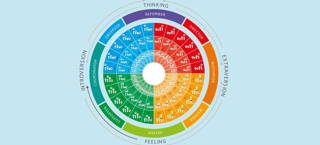
Want to take it a step further? Try combining 360-degree feedback with personality insights, like the 4-color personality test. It helps teams understand how different personality types communicate and work together.
Curious how to apply it in your organization? This guide explains exactly how to do that: 👉 A detailed guide for using a 4-color personality test in organizations
If the results from your 360-degree feedback are all over the place, that’s not a bad thing — it just means there’s something to learn. Maybe there are areas where you can grow, or maybe you're doing much better than you thought and deserve a pat on the back.
In workplaces where giving and receiving feedback is part of the culture, you often don’t even need to ask for it — it’s simply part of how people work together. The key is not to treat 360-degree feedback as just another task to tick off, but to actually use it. That’s what helps you stay sharp, keep growing, and continue developing both personally and professionally.
If you are required to be judged by your colleagues, keep the following in mind:
The benefits of 360-degree feedback
Both mandatory and voluntary 360-degree feedback evaluations give a well-rounded view of performance. Standard evaluations, where only the manager gives feedback, lack this balanced perspective. The positive impact of a good 360-degree evaluation on team productivity is often more important over time than its effects on individual employees.
More information for 360-degree feedback
Do you want to know more about 360-degree feedback? Please contact TestGroup.
Order: 360-degree feedback
You can order 360-degree feedback for your employee(s) here. TestGroup can organize the 360-degree feedback for you, but you can also do it independently through an account on the Bridge Assessment Platform.
Video: manage your 360-degree feedback with the Bridge Assessment Platform
Do you want to take 360-degree feedback in-house? With an account on the Bridge Assessment Platform, you can independently deploy The Bridge 360. You can choose from administration via credits or you can opt for a subscription with unlimited use.






















-
What is 360-degree feedback?
-
360-degree feedback is a performance and development method that collects feedback from multiple sources around an employee, such as managers, colleagues, direct reports, clients, and the employee themselves. The goal is to provide a complete picture of workplace behavior, strengths, and areas for improvement. TestGroup helps organizations implement effective 360-degree feedback processes through The Bridge 360.
-
How does 360-degree feedback work?
-
A 360-degree feedback process starts with selecting participants who regularly work with the employee. These participants complete an online questionnaire about competencies, behaviors, and performance. The results are combined into a confidential report that highlights strengths, development opportunities, and differences between self-perception and external feedback. The Bridge 360 automates this process and provides clear reports for employees and managers.
-
What are the benefits of 360-degree feedback?
-
360-degree feedback helps employees gain greater self-awareness, improve communication skills, strengthen leadership capabilities, and identify development opportunities. Organizations benefit from more objective feedback, stronger employee engagement, and a culture of continuous improvement.
-
Who should participate in a 360-degree feedback assessment?
-
Participants typically include managers, team members, direct reports, clients, suppliers, and the employee being assessed. Including multiple perspectives creates a more balanced and accurate view of workplace performance.
-
Is 360-degree feedback anonymous?
-
Yes, in most organizations, feedback from colleagues, direct reports, and clients is anonymous. Anonymity encourages honest and constructive feedback while increasing trust in the process. The Bridge 360 includes anonymous feedback options to support open participation.
-
What is the difference between performance reviews and 360-degree feedback?
-
Traditional performance reviews usually involve feedback from a manager only. 360-degree feedback gathers insights from multiple stakeholders, providing a broader and more complete view of employee performance and behavior.
-
How often should organizations use 360-degree feedback?
-
Many organizations conduct 360-degree feedback annually or every six to twelve months. Some companies combine formal feedback cycles with regular coaching conversations throughout the year to support continuous development.
-
Can 360-degree feedback be used for leadership development?
-
Yes. Leadership development is one of the most common applications of 360-degree feedback. Managers and leaders gain valuable insights into how their leadership style is experienced by others, helping them improve communication, collaboration, and decision-making.
-
What is a 360 feedback training?
-
A 360 feedback training teaches managers, HR professionals, coaches, and employees how to interpret feedback reports, provide constructive feedback, facilitate development conversations, and create effective action plans. TestGroup offers support and training alongside The Bridge 360 to help organizations maximize the value of their feedback programs.
-
How does The Bridge 360 support employee development?
-
The Bridge 360 helps organizations collect, analyze, and report feedback efficiently. It provides clear development reports, competency insights, and action-oriented recommendations that support employee growth. TestGroup uses The Bridge 360 to help organizations build stronger teams, improve leadership effectiveness, and create a culture of continuous learning.
-
Can 360-degree feedback improve employee performance?
-
Yes. Research shows that employees who receive structured feedback and development support are more likely to improve performance, increase self-awareness, and strengthen workplace relationships. When combined with coaching and follow-up actions, 360-degree feedback can have a significant impact on individual and organizational performance.
-
What is the best 360-degree feedback tool for organizations?
-
The best 360-degree feedback tool is one that is easy to use, provides reliable reporting, supports anonymous feedback, and helps organizations turn feedback into action. The Bridge 360 from TestGroup is designed specifically for companies and organizations that want a professional, scalable, and user-friendly 360-degree feedback solution.
Online Assessment Tips